Korean Drama Production: Lessons for US Filmmakers
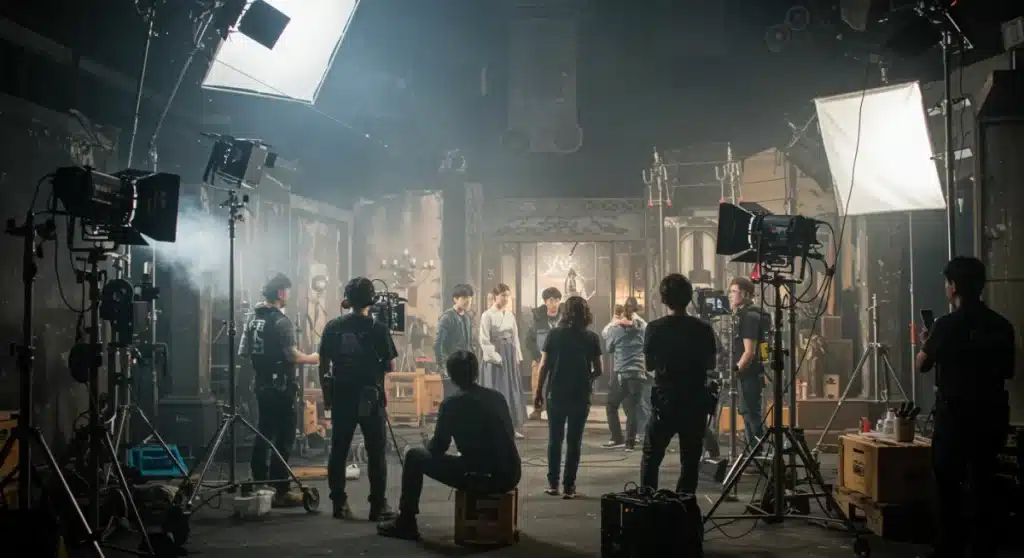
Korean drama production techniques offer a compelling blueprint for success, demonstrating how meticulous planning, innovative storytelling, and a deep understanding of audience engagement can transcend cultural barriers, providing valuable insights for US filmmakers.
The global entertainment landscape has been irrevocably reshaped by the meteoric rise of K-dramas, captivating audiences worldwide with their unique blend of compelling narratives and high production value. For US filmmakers, understanding Korean Drama Production Techniques: What US Filmmakers Can Learn is not just about appreciating a cultural phenomenon, but about gleaning actionable insights to elevate their own craft and reach a broader international audience.
The bedrock of compelling storytelling: Narrative structure and character depth
Korean dramas are renowned for their intricate plots and deeply developed characters, a cornerstone of their global appeal. This meticulous approach to narrative construction is a key area where US filmmakers can find valuable lessons.
From the initial concept, K-drama creators invest heavily in crafting stories that are not only engaging but also emotionally resonant, often exploring universal themes through a uniquely Korean lens. This dedication ensures that each character, regardless of their screen time, contributes meaningfully to the overarching plot and emotional arc.
The art of the long-form narrative
Unlike many Western series that often rely on episode-by-episode writing, K-dramas frequently have their entire season’s arc meticulously planned, if not fully written, before production begins. This allows for a coherence and thematic consistency that is often challenging to achieve in more improvisational production models.
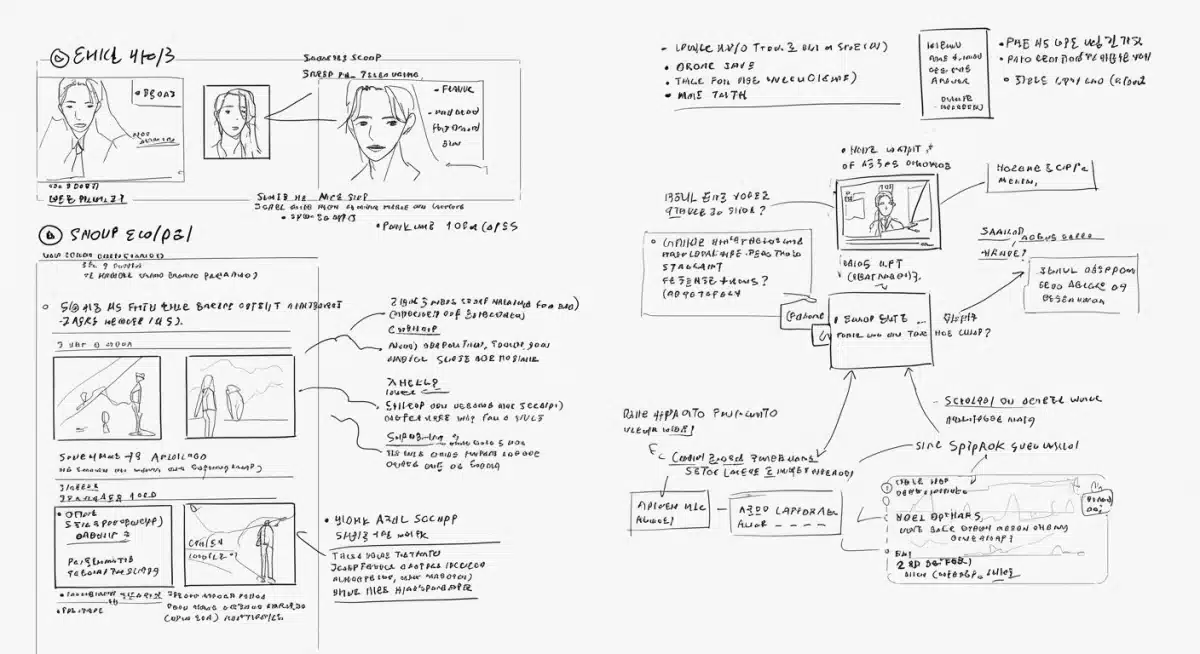
- Pre-production planning: Extensive storyboarding, script development, and character backstories are established well in advance.
- Consistent character arcs: Characters undergo significant, believable development over the course of the series, driven by well-defined motivations.
- Thematic unity: A central theme or message often underpins the entire drama, providing depth and resonance.
Emotional depth and relatability
K-dramas excel at portraying complex human emotions and relationships with nuance and authenticity. This often involves exploring societal pressures, family dynamics, and personal struggles in ways that resonate deeply with viewers across different cultures.
The focus on emotional intelligence within the narrative allows for characters to evolve in ways that feel organic and impactful, fostering a strong connection with the audience. US productions could benefit from a similar emphasis on emotional authenticity, moving beyond superficial portrayals to explore the rich tapestry of human experience.
Ultimately, the success of Korean dramas in capturing hearts globally stems from their unwavering commitment to storytelling excellence. By prioritizing robust narratives and deeply human characters, US filmmakers can unlock new levels of audience engagement and critical acclaim.
Efficient production models and rigorous scheduling
One of the less visible yet crucial aspects of K-drama success lies in their highly efficient production models and disciplined scheduling. While often working under tight deadlines, the Korean industry has perfected a system that maximizes output without necessarily compromising quality.
This efficiency is a testament to meticulous planning and a highly collaborative environment, where every department works in sync to meet ambitious production targets. US filmmakers, accustomed to different pacing, can learn valuable lessons in optimizing resource allocation and workflow management.
The live-shoot system and its implications
Many K-dramas historically utilized a ‘live-shoot’ system, where episodes are filmed just days before airing. While this presents significant challenges, it also allows for real-time audience feedback integration, demonstrating an unparalleled responsiveness to viewer preferences.
- Audience engagement: The ability to adjust narratives based on viewer reactions fosters a strong sense of community and investment.
- Rapid adaptation: Production teams become adept at quick problem-solving and creative improvisation.
- High pressure, high reward: The intense schedule often cultivates a dedicated and highly skilled crew.
Streamlined pre-production and post-production workflows
Despite the live-shoot pressures, K-drama productions often boast exceptionally organized pre-production, with detailed scripts, storyboards, and casting decisions made well in advance. This front-loading of effort helps mitigate some of the later-stage stress.
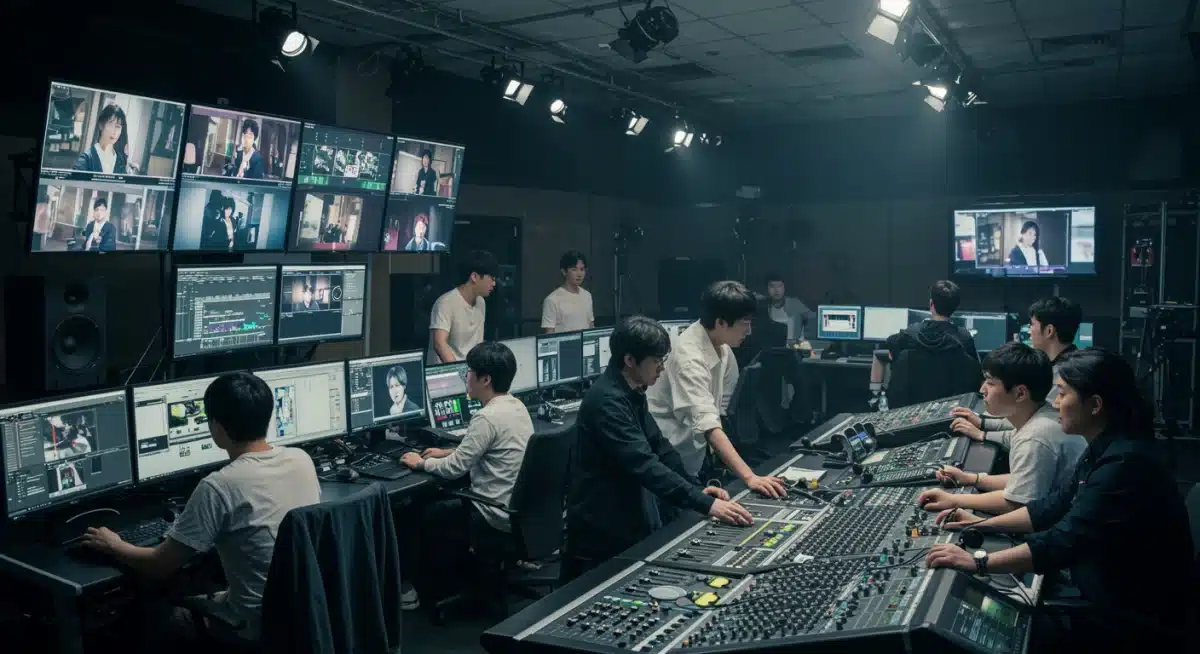
Post-production, though compressed, is also remarkably efficient, leveraging skilled editors and sophisticated technology to deliver polished episodes on schedule. This synergy between departments showcases a highly integrated approach that prioritizes timely delivery without sacrificing the aesthetic quality that viewers have come to expect.
The Korean model emphasizes precision at every stage, from conceptualization to final delivery. Adopting elements of this rigorous, yet flexible, production ethos could help US productions achieve greater efficiency and maintain higher creative standards under pressure.
Visual aesthetics and cinematic excellence
Beyond compelling stories, Korean dramas are visually stunning, often employing cinematic techniques that rival feature films. This commitment to high visual aesthetics is a deliberate choice, recognizing that immersive visuals enhance the storytelling experience and captivate global audiences.
From breathtaking cinematography to exquisite set design and costume work, every visual element is carefully curated to contribute to the overall narrative and mood. US filmmakers can draw inspiration from this holistic approach to visual storytelling.
Cinematography that tells a story
K-dramas often feature dynamic camera work, innovative shot compositions, and sophisticated lighting that elevates the visual narrative. Directors of photography in the K-drama industry are adept at using visuals to convey emotion, tension, and character perspective.
The framing, color grading, and movement are not merely decorative; they are integral to the storytelling, adding layers of meaning and depth to each scene. This attention to detail transforms typical television viewing into a cinematic experience, raising the bar for episodic content.
Art direction and production design
The meticulous attention to detail extends to art direction and production design, where sets and locations are often crafted with an eye for both aesthetic beauty and narrative relevance. Each setting becomes a character in itself, reflecting the story’s themes and the characters’ inner worlds.
- Iconic locations: Many K-dramas feature memorable and visually striking locations, both real and constructed, that become synonymous with the series.
- Period piece accuracy: Historical dramas, in particular, demonstrate an incredible commitment to authentic and elaborate period costumes and sets.
- Symbolic use of props: Everyday objects are often imbued with symbolic meaning, adding subtle layers to the narrative.
The visual language of K-dramas is a powerful tool for global communication, transcending language barriers and drawing viewers into their meticulously crafted worlds. By investing more in these cinematic elements, US productions can create more immersive and universally appealing content.
Sound design and original soundtracks
The auditory experience in Korean dramas is just as carefully constructed as the visual one, with exceptional sound design and iconic original soundtracks (OSTs) playing a pivotal role in their emotional impact and memorability. This thoughtful integration of sound is a powerful tool that US productions can further explore.
K-drama OSTs are often standalone successes, with songs becoming chart-toppers and integral to the drama’s identity. This synergy between music and narrative is a hallmark of the genre, deepening emotional resonance and enhancing the overall viewing experience.
The emotional power of OSTs
Original soundtracks in K-dramas are not merely background music; they are carefully composed pieces that amplify the emotional beats of the story. Each song is often strategically placed to underscore specific character developments, plot twists, or romantic moments.
The selection of artists, lyrical content, and musical style are all meticulously chosen to align with the drama’s themes, creating an immersive auditory landscape. US filmmakers could benefit from a more integrated approach to soundtrack development, viewing music as a core narrative element rather than an afterthought.
Detailed sound design and Foley art
Beyond the music, K-dramas often boast incredibly detailed sound design, with every ambient noise, footstep, and subtle gesture meticulously crafted to enhance realism and immersion. This attention to auditory detail contributes significantly to the viewer’s sense of being present in the story’s world.
- Atmospheric sounds: Carefully chosen ambient sounds create a distinct atmosphere for each scene and location.
- Emotional cues: Specific sound effects are often used to punctuate emotional moments or comedic timing.
- High-quality mixing: The overall sound mix ensures that dialogue, music, and effects are perfectly balanced for optimal clarity and impact.
The sophisticated use of sound and music in Korean dramas demonstrates a deep understanding of how auditory elements can profoundly influence audience perception and emotional engagement. Integrating similar levels of care into US productions could significantly elevate their overall impact.
Talent cultivation and global casting strategies
The Korean entertainment industry has a highly developed system for cultivating talent, from rigorous idol training programs to specialized acting schools. This robust pipeline ensures a continuous supply of highly skilled actors and performers, many of whom possess diverse talents beyond acting.
Furthermore, K-dramas increasingly employ global casting strategies, featuring actors from various nationalities to appeal to a wider international audience. These approaches present valuable lessons for US filmmakers looking to diversify their talent pool and expand their global reach.
The comprehensive training system
Many K-drama actors begin their careers through intensive training programs that hone not only their acting skills but also singing, dancing, and foreign language abilities. This multifaceted training creates versatile performers capable of handling diverse roles and challenges.
This holistic approach to talent development ensures that actors are well-prepared for the demands of high-pressure productions and can deliver nuanced performances across various genres. US acting schools and industry development programs could explore similar comprehensive training models.
Strategic casting for international appeal
While often featuring established Korean stars, K-dramas are increasingly open to casting international actors, particularly in roles that require specific linguistic or cultural backgrounds. This strategic casting broadens the drama’s appeal and makes it more accessible to non-Korean speaking audiences.
- Diverse representation: Incorporating actors from various ethnic and national backgrounds reflects a more globalized world.
- Language versatility: Actors who can perform in multiple languages add authenticity and broader market appeal.
- Star power synergy: Combining local and international stars can create powerful cross-cultural marketing opportunities.
By investing in comprehensive talent development and embracing more diverse and globally-minded casting strategies, US filmmakers can enhance the quality of their productions and expand their audience base in an increasingly interconnected world.
Innovative marketing and fan engagement
Korean dramas are not just successful because of their production quality; their marketing and fan engagement strategies are equally sophisticated, creating passionate global communities around their shows. This proactive and interactive approach to audience building offers significant takeaways for US filmmakers.
From pre-release hype to post-finale fan service, K-drama marketing teams excel at maintaining audience interest and fostering deep loyalty. Their use of digital platforms and direct engagement techniques is a masterclass in modern entertainment marketing.
Pre-release buzz and social media campaigns
Prior to a drama’s release, extensive marketing campaigns are launched across various social media platforms, featuring teasers, behind-the-scenes glimpses, character introductions, and interactive polls. This builds anticipation and allows fans to feel involved from the outset.
The strategic release of promotional content ensures a steady stream of information that keeps the drama top-of-mind and generates organic discussions among potential viewers. US productions could adopt a more sustained and interactive pre-release strategy.
Fan service and community building
K-drama productions are renowned for their fan service, which includes everything from special episodes and fan meetings to merchandise and interactive online content. This direct engagement with the fanbase strengthens loyalty and creates a sense of community.
- Behind-the-scenes content: Regular updates and candid glimpses into the production process make fans feel connected.
- Actor interactions: Q&A sessions, live streams, and personal messages from the cast foster a strong bond with viewers.
- Merchandise and tie-ins: Official merchandise and collaborations extend the drama’s lifespan and brand presence.
The proactive cultivation of fan communities and the consistent delivery of engaging content beyond the episodes themselves are powerful tools for building lasting audience relationships. US filmmakers can learn to leverage these strategies to transform viewers into devoted advocates for their shows.
Adapting K-drama lessons for the US market
The insights derived from Korean drama production techniques are not about direct replication, but rather about thoughtful adaptation for the US market. While cultural contexts differ, the underlying principles of compelling storytelling, efficient production, visual excellence, and audience engagement are universal.
US filmmakers have a unique opportunity to blend their established strengths with these innovative approaches, creating content that resonates both domestically and internationally. The goal is to evolve, not to imitate, drawing inspiration from a successful model to forge new paths in global entertainment.
Embracing innovative storytelling models
Moving beyond traditional episodic structures, US productions could experiment with more serialized narratives that allow for deeper character exploration and complex plot developments. This might involve adopting K-drama’s pre-planned season arcs to ensure greater narrative cohesion.
Furthermore, exploring a wider range of genres and thematic explorations, including those that delve into nuanced social commentaries or heartfelt human experiences, could broaden appeal. The K-drama model demonstrates that authenticity and emotional depth are powerful drivers of audience connection.
Investing in holistic production excellence
A renewed focus on integrated production quality, from cinematic visuals and immersive soundscapes to meticulously crafted scripts, can elevate the overall viewing experience. This means treating every aspect of production as a critical component of storytelling, rather than a separate department.
- Cross-departmental collaboration: Fostering a more collaborative environment where creative teams work closely from conception to delivery.
- Prioritizing visual and auditory quality: Allocating resources to ensure high-end cinematography, art direction, and sound design.
- Long-term talent development: Investing in training programs that create versatile and highly skilled performers.
By thoughtfully integrating these lessons, US filmmakers can enhance their creative output, streamline their processes, and ultimately produce content that enjoys widespread critical and commercial success on a global scale. The K-drama phenomenon offers a rich tapestry of techniques waiting to be explored and adapted.
| Key Aspect | Description for US Filmmakers |
|---|---|
| Narrative Depth | Focus on intricate plots and profound character development with pre-planned season arcs for coherence. |
| Production Efficiency | Adopt streamlined pre-production and efficient workflows to maximize output and maintain quality under pressure. |
| Visual & Auditory Excellence | Prioritize cinematic visuals, detailed art direction, and emotionally resonant original soundtracks. |
| Audience Engagement | Implement innovative marketing, active social media, and extensive fan service to build loyal communities. |
Frequently asked questions about K-drama production
K-dramas prioritize intricate character development and explore universal themes like family, love, and societal pressures with nuance. This focus on emotional authenticity, combined with detailed scriptwriting and stellar acting, allows viewers to form deep connections with the characters and their journeys.
The ‘live-shoot’ system involves filming episodes just days before they air. While demanding, it allows production teams to incorporate real-time audience feedback, adapting storylines to viewer preferences. This responsiveness fosters strong fan engagement and a unique interactive viewing experience.
K-drama OSTs are meticulously crafted to enhance the emotional beats of the story, serving as integral narrative elements. They often feature popular artists and lyrics that resonate with the drama’s themes, making them highly memorable and successful as standalone musical works.
US filmmakers can adopt K-drama’s proactive marketing by building pre-release buzz with teasers and behind-the-scenes content. Engaging directly with fans through social media, Q&A sessions, and fan service events helps foster strong community loyalty and sustained interest.
Visual aesthetics are crucial in K-dramas, with cinematic cinematography, exquisite set design, and detailed art direction. These elements are not just decorative; they are integral to storytelling, creating immersive worlds that captivate global audiences and enhance emotional resonance.
Conclusion
The global phenomenon of Korean dramas offers a rich and multifaceted learning opportunity for US filmmakers. By examining their meticulous approach to narrative construction, efficient production models, stunning visual and auditory aesthetics, and innovative fan engagement strategies, Hollywood can glean invaluable insights. Integrating these Korean Drama Production Techniques: What US Filmmakers Can Learn is not merely about imitation, but about thoughtful adaptation to enhance creative output, foster deeper audience connections, and ultimately, carve out new pathways to global success in an ever-evolving entertainment landscape. The future of filmmaking lies in embracing diverse influences and continuously refining the art of storytelling for a worldwide audience.