Korean Drama Subtitles: How Translation Choices Impact US Viewers
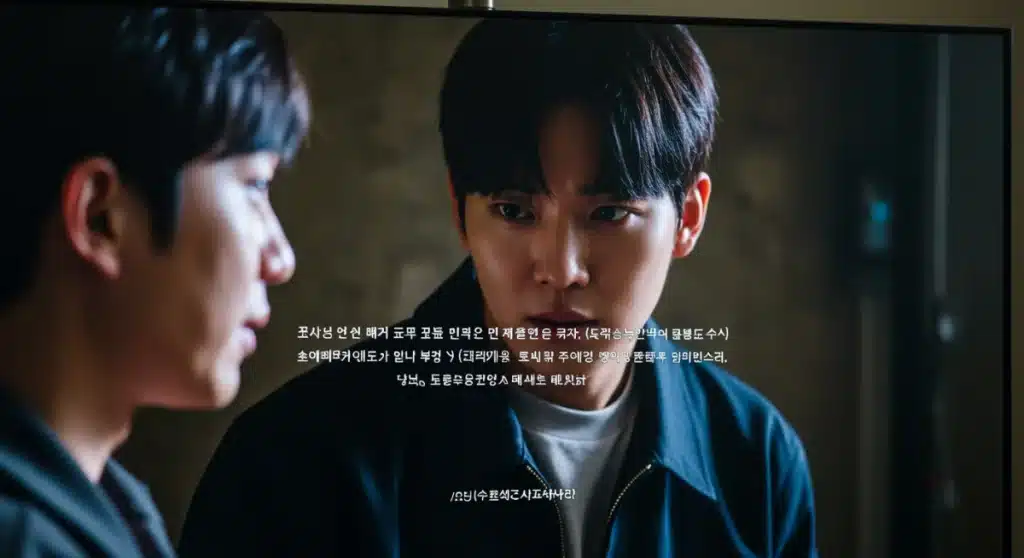
The accuracy and cultural sensitivity of Korean drama subtitles critically shape US viewers’ understanding and emotional connection to K-dramas, influencing their perception of Korean culture and narrative nuances.
The global popularity of K-dramas has skyrocketed, captivating audiences worldwide, and for many in the United States, the gateway to these compelling narratives is through subtitles. Understanding how Korean drama subtitles are crafted and the choices made during translation is crucial, as these decisions profoundly impact US viewers’ perceptions of the stories, characters, and even Korean culture itself.
The intricate art of subtitle translation
Subtitle translation is far more complex than a simple word-for-word conversion. It’s an intricate art that demands linguistic precision, cultural understanding, and an acute awareness of the target audience. For Korean dramas reaching US viewers, translators face the challenging task of bridging significant cultural and linguistic gaps.
The goal is not just to convey the literal meaning but to retain the emotional depth, humor, and cultural context embedded in the original Korean dialogue. This often involves making difficult choices about how much to adapt versus how much to explain, all while adhering to strict character limits and reading speeds.
Linguistic challenges and nuances
Korean is a language rich in honorifics, politeness levels, and idiomatic expressions that have no direct English equivalents. Translators must decide how to best represent these nuances without overburdening the viewer or losing the essence of the interaction.
- Honorifics: The use of different speech levels based on age, status, and relationship is fundamental in Korean. Translators might use terms like “sir,” “ma’am,” or more descriptive phrases to indicate respect, or sometimes omit them if the context is clear, risking a loss of social hierarchy perception.
- Idioms and proverbs: Korean dramas frequently use idiomatic expressions and proverbs that carry deep cultural meaning. A literal translation would be nonsensical to a US audience, requiring translators to find culturally relevant equivalents or to paraphrase effectively.
- Wordplay and puns: Humor in K-dramas often relies on wordplay. Translating these jokes without losing their comedic impact is a significant challenge, sometimes leading to explanatory notes or creative adaptations that might not fully capture the original wit.
These linguistic hurdles mean that every translated line is a careful balancing act. The translator must constantly weigh accuracy against readability and cultural relevance, striving to create a seamless viewing experience that doesn’t alienate the audience while still respecting the source material.
Cultural context and its impact on viewer perception
Beyond linguistic differences, cultural context plays a monumental role in how US viewers perceive Korean dramas through subtitles. Many aspects of Korean society, from family dynamics to social etiquette, are implicitly understood by native speakers but require careful explanation or adaptation for a foreign audience.
Translators act as cultural mediators, deciding which cultural references to explain, which to simplify, and which to leave for the audience to infer. These choices directly shape how US viewers interpret character motivations, plot developments, and even the broader message of a drama.
Navigating social norms and traditions
Korean dramas often depict social norms around dating, marriage, work, and family that differ significantly from those in the United States. Subtitles must convey these differences in a way that is understandable and relatable without being overly didactic.
- Family hierarchy: The strong emphasis on filial piety and respect for elders is a recurring theme. Subtitles might clarify relationships (e.g., “older sister” instead of just “sister” if status is important) or use descriptive language to highlight respectful behavior.
- Food culture: Food is central to Korean life and dramas. Translating food names and related customs (like sharing meals) helps viewers appreciate the cultural significance of these scenes, rather than just seeing them as filler.
- Historical and political references: Some dramas touch upon specific historical events or political situations. Subtitles may include brief explanations to provide necessary context, allowing US viewers to grasp the gravity or irony of certain dialogues.
When cultural elements are poorly translated or entirely omitted, US viewers might misunderstand character reactions or plot points, leading to a diminished or even distorted perception of the narrative. Conversely, well-executed cultural translation enriches the viewing experience, fostering greater appreciation for Korean culture.
Translation strategies: literal vs. localized
Translators employ various strategies, broadly categorized as literal or localized, each with distinct implications for US viewers. The choice between these approaches significantly influences the viewing experience and the audience’s engagement with the drama.
A literal translation aims to stay as close as possible to the source text, often sacrificing natural flow in the target language for accuracy. Localization, on the other hand, prioritizes making the content relatable and understandable to the target audience, even if it means deviating more from the original wording.
When literal translation falls short
While a literal approach might seem ideal for preserving authenticity, it often fails to capture the emotional tone or cultural nuances of Korean dialogue. Direct translations of common phrases or expressions can sound awkward or even nonsensical in English, hindering viewer immersion.
- Awkward phrasing: A direct translation of a Korean idiom might result in an English phrase that sounds clunky or unnatural, making dialogue difficult to follow.
- Loss of emotional impact: The emotional weight of a statement can be lost if the literal translation doesn’t convey the same feeling in English, leading to US viewers misinterpreting character emotions.
- Cultural disconnect: Without contextualization, literal translations of cultural practices or references can leave US viewers confused or detached from the story, as they lack the background knowledge to understand the implications.

Conversely, a highly localized approach might sacrifice some of the original cultural flavor for the sake of immediate understanding. Striking the right balance is key to ensuring that Korean drama subtitles are both accurate and engaging for US audiences. The best translations often blend elements of both strategies, adapting where necessary while preserving the unique Korean essence.
The role of streaming platforms and fan translations
Streaming platforms have revolutionized access to K-dramas, making them available to a global audience. However, the quality and approach to subtitles can vary significantly between official platform translations and fan-made versions, profoundly affecting US viewers’ experiences.
Official streaming services like Netflix and Viki invest heavily in professional translation teams, often employing cultural consultants to ensure accuracy and nuance. Fan translations, while passionate and often quick, can sometimes lack the professional polish or deep cultural insight.
Official vs. fan-made subtitles
Official translations typically adhere to industry standards for readability and accuracy. They aim for a broad appeal and often prioritize clarity and cultural accessibility for a diverse international audience. This can sometimes mean simplifying complex cultural concepts.
- Consistency: Official translations maintain consistency in terminology and character voice across an entire series, which is crucial for long-form narratives.
- Cultural notes: Some platforms incorporate on-screen cultural notes or glossary features, offering additional context without disrupting the main subtitle flow, greatly enhancing understanding for US viewers.
- Speed vs. quality: Fan translations, particularly during a drama’s live airing, can be incredibly fast, but this speed can sometimes come at the cost of accuracy or nuanced understanding.
Fan translators, often deeply immersed in K-drama culture, might offer more specific cultural explanations or use more informal language that resonates with a particular segment of the audience. However, the lack of professional oversight can lead to inconsistencies or misinterpretations that, while well-intentioned, can alter a US viewer’s perception of the drama.
Misinterpretations and their consequences
Even the most skilled translators can face challenges that lead to misinterpretations in subtitles. These errors, whether linguistic or cultural, can have significant consequences for US viewers, altering their understanding of the plot, characters, and even the underlying themes of a Korean drama.
A seemingly minor mistranslation can shift the emotional weight of a scene, change a character’s motivation, or even lead to a complete misunderstanding of a crucial plot point. For US audiences relying solely on subtitles, these inaccuracies can be particularly impactful.
Examples of common pitfalls
- Mistranslation of tone: Korean speech often relies on tone and context to convey sarcasm, affection, or anger. If subtitles fail to capture this tone, a tender moment might appear bland, or a humorous exchange might come across as serious.
- Cultural appropriation: In some cases, localization efforts can go too far, replacing Korean cultural elements with inappropriate Western equivalents, leading to a loss of authenticity and potentially offending viewers who seek genuine cultural experiences.
- Loss of subtlety: Many K-dramas are rich in subtle symbolism and unspoken emotions. If subtitles are too direct or simplistic, these layers of meaning can be lost, resulting in a less profound viewing experience for US audiences.
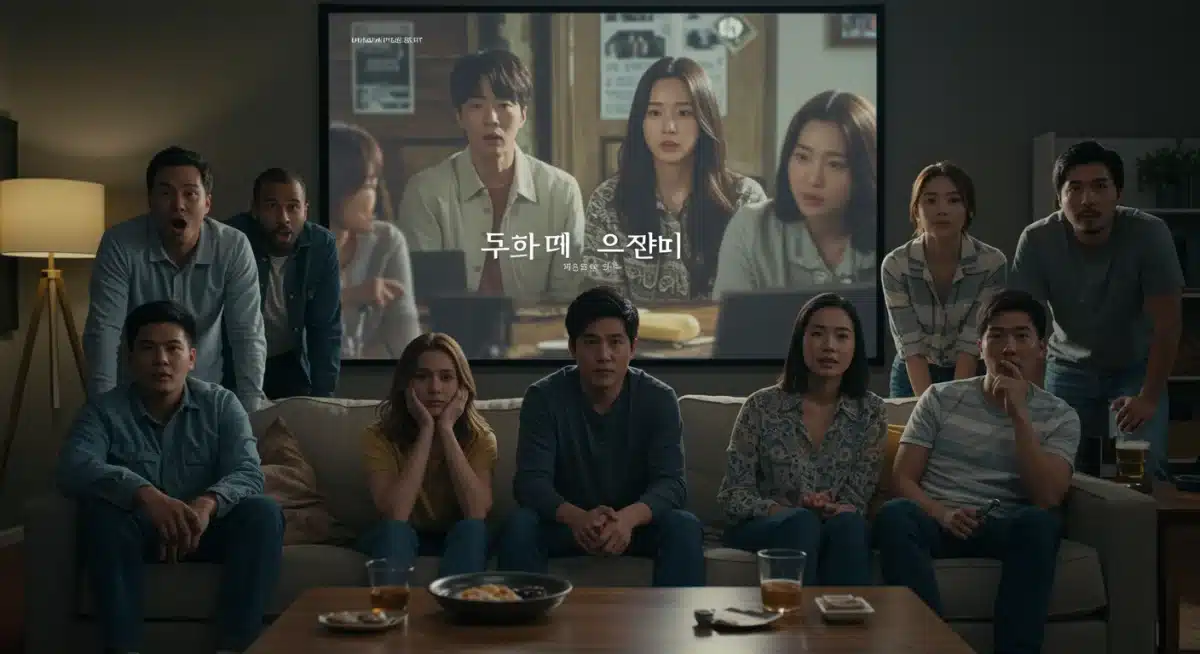
These misinterpretations can lead to US viewers forming inaccurate perceptions of Korean communication styles, social dynamics, and cultural values. It underscores the critical responsibility of subtitle translators to bridge not just language barriers but also deep cultural divides, ensuring that the intended message reaches its diverse audience authentically.
Enhancing the US viewer experience
To truly appreciate the richness of Korean dramas, US viewers benefit immensely from high-quality, culturally sensitive subtitles. The continuous evolution of translation practices and technology offers promising avenues to enhance this experience, making K-dramas even more accessible and enjoyable.
Beyond mere linguistic conversion, effective subtitling involves anticipating viewer needs and proactively addressing potential cultural gaps. This holistic approach ensures that the narrative’s integrity and cultural depth are preserved, allowing US audiences to connect more deeply with the stories.
Strategies for better subtitles
- Glossaries and cultural notes: Integrating optional glossaries or footnotes for specific cultural terms, historical references, or honorifics can provide valuable context without disrupting the main subtitles, empowering US viewers to learn more.
- Dual-layer subtitles: Some platforms experiment with dual-layer subtitles, offering both a literal translation and a more localized version, allowing viewers to switch based on their preference and learning goals.
- Community feedback: Incorporating feedback loops where US viewers can report confusing subtitles or suggest improvements can help refine translation quality over time, fostering a collaborative approach to cultural understanding.
Ultimately, the goal is to create a viewing experience where the subtitles become a transparent window into the drama, rather than a barrier. When done well, Korean drama subtitles not only facilitate understanding but also serve as a powerful tool for cultural exchange, enriching the lives of US viewers and broadening their worldviews.
The future of K-drama subtitles for global audiences
As K-dramas continue their global ascendancy, the future of subtitling will undoubtedly evolve to meet the demands of an increasingly diverse international audience, including a growing base of US viewers. Innovations in AI and a deeper understanding of audience needs are shaping this trajectory.
The industry is moving towards more sophisticated translation solutions that combine the efficiency of technology with the irreplaceable nuance of human expertise. This hybrid approach promises to deliver subtitles that are not only accurate but also culturally resonant and emotionally impactful.
Technological advancements and human expertise
- AI-assisted translation: AI tools can handle repetitive tasks and provide initial drafts, freeing human translators to focus on cultural adaptation, idiomatic expressions, and emotional accuracy.
- Personalized subtitles: Future technologies might offer personalized subtitle options, allowing viewers to choose between different levels of cultural explanation or linguistic formality based on their preferences.
- Interactive viewing: Imagine subtitles that, when paused, offer instant definitions of cultural terms or background information on historical events, creating a truly immersive and educational experience for US viewers.
The ongoing dialogue between content creators, translators, and international audiences will continue to refine the art of subtitling. For US viewers, this means an ever-improving gateway to the captivating world of Korean dramas, ensuring that translation choices continue to enhance, rather than hinder, their perceptions and enjoyment. The commitment to nuanced and culturally sensitive subtitles is paramount in fostering a deeper global appreciation for K-drama storytelling.
| Key Aspect | Impact on US Viewers |
|---|---|
| Linguistic Nuances | Affects understanding of dialogue subtleties, humor, and character relationships due to honorifics and idioms. |
| Cultural Context | Shapes perception of social norms, traditions, and motivations, crucial for holistic story comprehension. |
| Translation Strategy | Literal vs. localized choices influence naturalness, relatability, and depth of cultural immersion for audiences. |
| Subtitle Quality | Professional vs. fan translations impact consistency, accuracy, and overall viewing enjoyment and cultural learning. |
Frequently asked questions about Korean drama subtitles
Subtitle accuracy can vary due to several factors, including translator expertise, time constraints, budget limitations of the distributor, and the complexity of cultural nuances. Fan-made subtitles, while quick, may also lack the professional vetting of official versions, leading to occasional inaccuracies or less polished phrasing.
Honorifics denote respect and social hierarchy in Korean. When translated, they help US viewers understand character relationships and power dynamics. Poor translation can flatten these relationships, making interactions seem less formal or respectful than intended, thus altering character perception.
Literal translation aims for word-for-word accuracy, which can sometimes result in awkward English. Localized translation adapts the text to fit the target audience’s cultural context and language flow, prioritizing naturalness and relatability, even if it deviates slightly from the original phrasing.
Capturing Korean humor and wordplay in subtitles is extremely challenging. Often, direct translations fall flat. Skilled translators might use creative adaptations, equivalent English jokes, or brief explanations to convey the intended humor, though some nuances might inevitably be lost in translation.
Streaming platforms play a significant role. Major platforms often employ professional teams and cultural consultants, leading to high-quality, consistent subtitles. Their resources allow for better research and quality control, enhancing the viewing experience and cultural understanding for US audiences.
Conclusion
The journey of a Korean drama from its original language to the screens of US viewers is profoundly shaped by the art and science of subtitling. Every translation choice, whether it pertains to linguistic nuances, cultural context, or the strategic approach employed, directly impacts how these captivating narratives are received and understood.
High-quality subtitles are not merely functional tools for comprehension; they are vital bridges that connect cultures, allowing US audiences to delve deeper into the emotional landscapes and societal intricacies of Korean storytelling. As K-dramas continue to charm the world, the dedication to accurate, culturally sensitive, and engaging subtitles will remain paramount, enriching the global viewing experience and fostering a greater appreciation for the vibrant world of Korean entertainment.