Decoding Japanese Drama Endings: 5 Common Tropes Explained
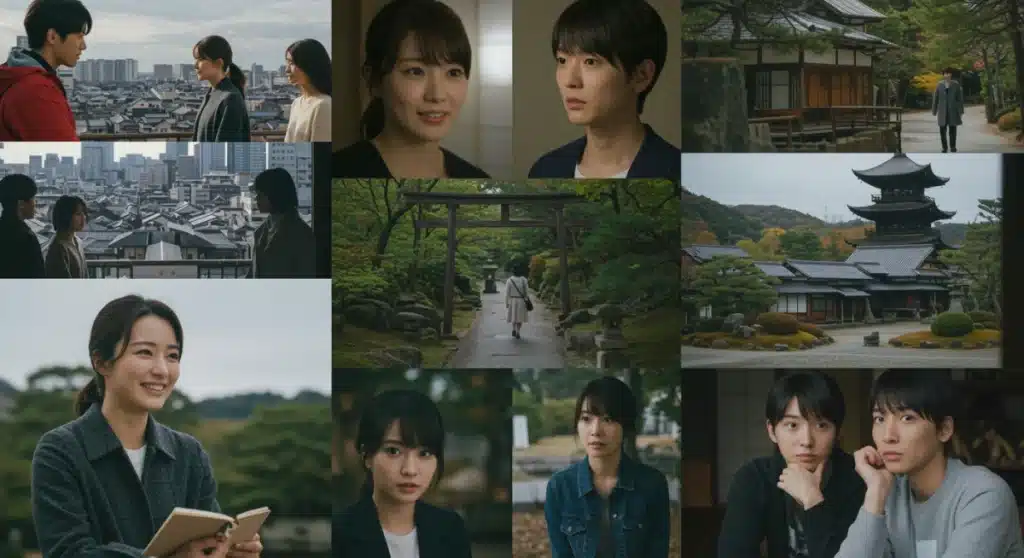
Japanese drama endings frequently employ distinct narrative devices that reflect cultural values and storytelling traditions, offering insights into character development and societal perspectives.
For many international viewers, the conclusion of a Japanese drama can sometimes feel perplexing or even incomplete. Unlike Western narratives that often strive for definitive resolution, J-dramas frequently embrace ambiguity, subtlety, and a unique emotional depth in their final moments. Understanding the common tropes in Japanese drama endings is key to fully appreciating the intricate storytelling and cultural nuances embedded within these captivating series.
The ambiguous farewell: open endings and character growth
Japanese dramas frequently leave viewers with what might be perceived as an open ending, where not every plot thread is neatly tied, and the characters’ futures remain somewhat uncertain. This approach isn’t a flaw in storytelling but rather a deliberate artistic choice that emphasizes character development and the ongoing journey of life, rather than a fixed destination.
These ambiguous farewells encourage audiences to ponder the characters’ paths beyond the final frame, fostering a deeper, more personal connection to the narrative. It suggests that life itself is a continuous process of learning and adapting, and rarely offers absolute closure in every situation. This resonates deeply with Japanese philosophical traditions that value the impermanence of things and the beauty found in transition.
The power of suggestion
Instead of explicit declarations, J-dramas often rely on subtle cues and suggestive imagery to convey the future. A lingering glance, a shared smile, or a symbolic scene can speak volumes without needing verbose explanations. This requires the viewer to engage actively with the story, interpreting emotions and potential outcomes based on the build-up throughout the series.
- Visual Metaphors: Often use natural elements like changing seasons, blooming flowers, or flowing water to symbolize growth or new beginnings.
- Unspoken Promises: Characters might not verbally commit to a future, but their actions and expressions hint at a strong, enduring bond.
- Individual Interpretations: The lack of a definitive answer allows each viewer to imagine the most fitting conclusion for themselves, making the experience highly personal.
Focus on internal journeys
More often than not, the true resolution in an ambiguous ending lies within the characters themselves. Their internal struggles, their growth, and their newfound understanding are the real accomplishments, regardless of external circumstances. The ending might show them at peace with their decisions, even if those decisions don’t lead to a conventionally ‘happy’ outcome.
This focus on internal transformation over external triumph is a hallmark of many J-dramas. It suggests that true happiness and fulfillment come from within, from accepting oneself and one’s circumstances, rather than from achieving a perfect external reality. The journey of self-discovery is presented as more valuable than the attainment of specific goals.
Ultimately, the ambiguous ending in Japanese dramas serves as a powerful reminder that life is a series of ongoing experiences, and true growth comes from navigating its uncertainties. It’s a conclusion that respects the viewer’s intelligence and invites them to participate in the narrative’s lasting impact.
The bittersweet resolution: triumph mixed with melancholy
Another prevalent trope in Japanese drama is the bittersweet resolution, an ending that blends elements of success or happiness with an underlying sense of sadness or loss. This isn’t a failure to deliver a happy ending, but rather a sophisticated reflection of life’s complexities, where joy and sorrow often coexist.
Such endings often portray characters achieving their goals or finding love, but at a personal cost, or with the understanding that some things, once lost, cannot be fully recovered. This nuanced approach prevents the story from feeling overly simplistic or unrealistic, grounding it in a more profound emotional reality.
Sacrifice and growth
Bittersweet endings frequently involve characters making significant sacrifices for the greater good, for their loved ones, or for their personal principles. While these sacrifices lead to a form of triumph, they also leave an indelible mark, resulting in a melancholic undertone. This illustrates the idea that true growth often comes from enduring hardship and making difficult choices.
The pain of these sacrifices is not erased by the positive outcome, but rather integrated into the characters’ understanding of life. They emerge stronger and wiser, but also with a deeper appreciation for what they have lost. This theme is particularly common in dramas dealing with themes of war, illness, or societal change, where individual happiness is often secondary to collective well-being.
The passage of time and inevitable change
Many bittersweet conclusions acknowledge the irreversible flow of time and the inevitability of change. Relationships evolve, circumstances shift, and characters grow apart, even if they once shared deep connections. The ending might show characters moving on, having learned valuable lessons, but with a quiet longing for what once was.
- Nostalgia for the Past: Acknowledging past joys and sorrows as part of the journey, even if those moments are gone.
- Acceptance of Imperfection: Realizing that perfect happiness is an illusion, and finding contentment in imperfect realities.
- Subtlety in Emotion: Emotions are often conveyed through quiet moments and internal monologues rather than grand gestures, emphasizing depth over spectacle.
The bittersweet resolution resonates deeply because it mirrors the human experience, where moments of profound happiness are often intertwined with moments of sorrow. It teaches viewers to appreciate the fleeting nature of joy and to find beauty in both the light and shadow of life’s tapestry.
The ‘new beginning’ ending: hope beyond the horizon
In contrast to the purely ambiguous or bittersweet, many Japanese dramas conclude with a strong emphasis on a ‘new beginning.’ While not always a traditional ‘happy ever after,’ these endings infuse the narrative with a powerful sense of hope and forward momentum. Characters might not have achieved all their dreams, but they are clearly positioned to embark on a fresh chapter, armed with new strength and perspective.
This trope often signifies growth and resilience, where past struggles serve as foundations for a brighter future. It’s about the promise of potential, the courage to step into the unknown, and the belief that even after hardship, life offers opportunities for renewal.

Embracing the future
These endings often see characters making definitive choices that propel them into a new phase of life. This could be a career change, a move to a new city, or the decision to pursue a long-held dream. The focus is less on the immediate outcome and more on the act of taking that crucial first step towards an unwritten future.
The visual language often supports this: characters looking towards a horizon, walking into a bright morning, or standing tall and confident. The message is clear: the past has shaped them, but the future is theirs to create, filled with untapped possibilities.
The power of self-reliance
Frequently, the ‘new beginning’ is propelled by a character’s newfound self-reliance and independence. They might have depended on others throughout the story, but the ending showcases their ability to stand on their own two feet and forge their own path. This is particularly common in coming-of-age dramas or stories about overcoming personal challenges.
- Individual Agency: Highlighting the characters’ active role in shaping their destiny.
- Lessons Learned: Demonstrating how past mistakes or failures have contributed to their current wisdom and determination.
- Community Support: While self-reliant, characters often depart with the blessings and encouragement of their friends and family, reinforcing the importance of social bonds.
The ‘new beginning’ ending serves as an uplifting conclusion, suggesting that even when a story ends, life continues to offer endless possibilities for growth and happiness. It’s a powerful message of optimism and the enduring human spirit.
The ‘loop’ ending: cyclical narratives and unresolved patterns
A more introspective and sometimes unsettling trope found in Japanese dramas is the ‘loop’ ending. This type of conclusion suggests that certain patterns, behaviors, or emotional cycles remain unbroken, even after the main narrative arc. It often implies that characters are destined to repeat similar experiences or that fundamental issues within society or relationships persist.
This is not necessarily a pessimistic ending, but rather a realistic portrayal of human nature and societal inertia. It questions whether true change is ever fully achievable or if we are perpetually caught in cycles, constantly learning and relearning the same lessons.
The illusion of progress
In a loop ending, characters might believe they have overcome their challenges, only to find themselves back in a similar situation, albeit with a deeper understanding. This can be seen in dramas exploring themes of addiction, complex family dynamics, or systemic societal problems. The resolution isn’t about escaping the cycle, but about recognizing its existence and perhaps finding a way to navigate it with more awareness.
The visual storytelling often reinforces this by mirroring initial scenes or dialogues, creating a sense of déjà vu. This technique forces viewers to reconsider the entire narrative, questioning whether the journey was about achieving a definitive end or simply about the experience of living through the cycle.
Reflection on human nature
The loop ending often serves as a commentary on the inherent flaws and repetitive nature of human behavior. It suggests that while individuals can grow, the underlying currents of society or personal psychology can be incredibly resistant to change. This can be a profound and thought-provoking way to conclude a story, inviting introspection rather than offering simplistic answers.
- Philosophical Depth: Encourages viewers to ponder deeper questions about fate, free will, and the nature of human existence.
- Moral Ambiguity: Challenges the idea of clear-cut good and evil, suggesting that everyone is caught in complex, repeating patterns.
- Uncomfortable Truths: Often presents realities that are not easily resolved, reflecting the complexities of real-world issues.
By employing the loop ending, Japanese dramas offer a powerful, often cyclical, narrative that defies conventional resolution, leaving a lasting impression and encouraging continued reflection on the themes presented.
The ‘happy ever after’ with a twist: subverting expectations
While less common than ambiguous or bittersweet conclusions, some Japanese dramas do embrace a ‘happy ever after’ ending. However, even these often come with a distinct Japanese twist, subverting typical expectations of Western romance or triumph. It’s rarely a fairytale perfect ending, but one that feels earned, often after significant struggle, and grounded in a more realistic, albeit joyful, future.
These endings emphasize the importance of hard work, perseverance, and mutual understanding in achieving happiness. The ‘twist’ often lies in the journey itself, or in the subtle ways characters redefine what ‘happy ever after’ truly means for them.

Redefining happiness
A typical Japanese ‘happy ever after’ might not involve grand declarations or lavish lifestyles. Instead, it often focuses on the quiet contentment found in everyday life, shared moments, and the simple joys of companionship. It’s a happiness that values stability, mutual respect, and the comfort of routine over dramatic passion.
The twist can be that the happy ending isn’t what the audience, or even the characters, initially expected. Perhaps the main character doesn’t end up with their perceived soulmate but finds profound happiness with someone entirely unexpected, or achieves success in a field they never considered. This teaches that happiness can manifest in diverse forms.
Earned contentment
These joyful conclusions are almost always preceded by substantial character development and overcoming significant obstacles. The happiness feels earned because the characters have worked hard, made sacrifices, and grown as individuals. It’s a reward for their perseverance, not an unearned gift.
- Growth Through Adversity: The characters’ happiness is directly proportional to the struggles they’ve overcome.
- Subtle Joy: Happiness is often portrayed through quiet, heartfelt moments rather than boisterous celebrations.
- Community Approval: The happiness is often validated or supported by the characters’ wider social circle, reflecting collective values.
The ‘happy ever after’ with a twist in Japanese dramas offers a refreshing take on traditional joyous conclusions, emphasizing realism, earned contentment, and the diverse forms that true happiness can take.
The reflective farewell: honoring tradition and memory
Beyond individual character arcs, many Japanese dramas utilize their endings to provide a reflective farewell, often serving as a commentary on tradition, memory, and the passage of generations. This trope is particularly common in historical dramas, family sagas, or stories set in rural areas struggling with modernization.
The ending doesn’t just conclude the story of the characters; it often offers a broader contemplation on the themes of heritage, the lessons of the past, and the enduring spirit of a community or culture. It’s a moment for quiet contemplation, connecting individual narratives to larger societal and historical contexts.
Connecting past, present, and future
These reflective endings often weave together different timelines or show how the actions of past generations continue to influence the present. A character might visit a significant historical site, read an old letter, or encounter an elder who embodies the wisdom of previous eras. This creates a sense of continuity and profound connection across time.
The visual storytelling might employ flashbacks or juxtapose old photographs with current scenes, emphasizing the weight of history. The conclusion becomes a bridge, linking the narrative to a broader cultural tapestry and suggesting that while individuals come and go, the essence of tradition and memory persists.
The legacy of struggle and triumph
The reflective farewell often focuses on the legacy left behind by the characters or their ancestors. This could be a legacy of resilience in the face of adversity, a tradition of craftsmanship, or the enduring impact of a particular philosophy. The ending celebrates not just individual achievements, but the collective human spirit to overcome and preserve.
- Generational Wisdom: Emphasizing the importance of learning from elders and past experiences.
- Cultural Preservation: Highlighting efforts to maintain traditions in a rapidly changing world.
- Quiet Dignity: Characters often conclude their journeys with a sense of quiet dignity, having contributed to something larger than themselves.
This trope offers a powerful and often moving conclusion, inviting viewers to reflect on their own heritage and the enduring power of memory and tradition in shaping identity and community. It’s a poignant reminder of where we come from and the stories that continue to define us.
| Ending Trope | Meaning and Characteristics |
|---|---|
| Ambiguous Farewell | Future of characters is uncertain, emphasizing ongoing life journeys and viewer interpretation. |
| Bittersweet Resolution | Triumph achieved but mixed with sadness or loss, reflecting life’s complexities. |
| New Beginning | Characters embark on a fresh chapter with hope, resilience, and newfound strength. |
| Loop Ending | Suggests cyclical patterns or unresolved issues persist, prompting deeper introspection. |
Frequently asked questions about J-drama endings
Many Japanese dramas feature open endings to emphasize ongoing character journeys and the continuous nature of life. This approach allows viewers to interpret outcomes, fostering a deeper, more personal connection to the narrative and reflecting philosophical traditions that value impermanence and transition.
A bittersweet ending in J-dramas combines elements of success or happiness with an underlying sense of sadness or loss. It reflects life’s complexities, where joy and sorrow often coexist, and characters might achieve goals at a personal cost, showcasing nuanced emotional reality.
While both are positive, ‘new beginning’ endings emphasize hope and forward momentum, positioning characters for a fresh chapter with new strength. ‘Happy ever after’ implies a definitive, often romantic, resolution, though in J-dramas, it often comes with a realistic twist, focusing on earned contentment.
A ‘loop’ ending suggests that certain patterns, behaviors, or emotional cycles remain unbroken, even after the main narrative. It implies that characters might repeat experiences, reflecting on human nature and societal inertia, prompting introspection rather than clear resolution.
No, Japanese drama endings are not always sad. While many embrace ambiguity or bittersweet tones, they also feature hopeful ‘new beginning’ conclusions and even ‘happy ever after’ endings with unique twists. The emotional range is diverse, reflecting the varied storytelling approaches.
Conclusion
Understanding the varied and often subtle nature of Japanese drama endings significantly enhances the viewing experience. From the thoughtful ambiguity that invites personal reflection to the bittersweet resolutions that mirror life’s complexities, and the hopeful ‘new beginnings’ that inspire, J-dramas offer a rich tapestry of narrative conclusions. These tropes are not merely stylistic choices but deeply embedded reflections of Japanese culture, philosophy, and storytelling traditions.
By recognizing these patterns, international audiences can move beyond expectations of Western narrative structures and appreciate the profound artistry and deeper meanings woven into each final scene, enriching their appreciation for this unique form of Asian storytelling.