Historical J-Dramas: 3 Authentic Details You Might Miss
Japanese historical dramas often depict a rich tapestry of the past, but recognizing three subtle authentic details can profoundly deepen viewer understanding and appreciation for their historical accuracy.
For enthusiasts of Japanese culture and compelling storytelling, Japanese historical dramas offer an unparalleled journey into the nation’s rich and often turbulent past. While many viewers are drawn to the captivating narratives, intricate costumes, and epic battles, there are often subtle, authentic details that can slip by unnoticed.
Uncovering these nuances not only enhances the viewing experience but also provides a deeper appreciation for the meticulous research and dedication that goes into producing these cinematic masterpieces. Let’s explore three such authentic details that you might have missed.
The Nuances of Social Hierarchy and Etiquette
Japanese historical dramas frequently immerse us in worlds where social structure dictated every interaction. Understanding the intricate layers of hierarchy and the specific etiquette associated with each rank is crucial to fully grasp the dynamics portrayed on screen. It wasn’t just about who bowed lower; it was about the depth of the bow, the words chosen, and even the direction of one’s gaze.
From the rigid samurai class to the common townsfolk, every individual had a prescribed place within society. This social order wasn’t merely a backdrop; it was an active force shaping character motivations, plot developments, and even the visual choreography of scenes. Ignoring these subtle cues means missing a significant layer of historical accuracy and character depth.
Bowing Etiquette: More Than Just a Greeting
One of the most visible aspects of Japanese etiquette is bowing, but its complexity in historical contexts goes far beyond a simple greeting. The angle, duration, and context of a bow conveyed respect, apology, gratitude, or submission. A slight nod of the head might suffice for equals, while a deep, prolonged bow, known as a saikeirei (最敬礼), was reserved for superiors or expressions of profound apology.
- Eshaku (会釈): A 15-degree bow, typically used for casual greetings among acquaintances.
- Keirei (敬礼): A 30-degree bow, indicating respect towards superiors or customers.
- Saikeirei (最敬礼): A 45-degree bow, expressing the highest level of respect, apology, or gratitude.
Observing these subtle differences in Japanese historical dramas can tell you much about the characters’ relationships and their understanding of social norms. A character who bows incorrectly or with insufficient deference might be signaling defiance, ignorance, or a deliberate insult, all of which would have serious implications in the rigid societies of historical Japan.
Language and Speech Patterns Reflecting Status
Beyond physical gestures, the language used in historical dramas is often a meticulous reconstruction of period-specific speech patterns and honorifics. Different social classes and regions had distinct dialects and ways of addressing others, which are often carefully integrated into the dialogue. While modern Japanese has simplified many of these distinctions, jidaigeki often retain them for authenticity.
For instance, the use of specific personal pronouns, verb endings, and honorifics (keigo) varied greatly depending on the speaker’s status relative to the listener. A samurai addressing a lord would use highly deferential language, while a commoner might use more direct or even crude forms of speech. Even within the samurai class, there were distinctions between addressing family members, retainers, and rival lords.
The careful attention to these linguistic details not only adds to the realism but also subtly informs the audience about the characters’ backgrounds and their current social standing. Missing these linguistic cues might mean overlooking critical elements of character development or plot progression. The way a character speaks can be as revealing as their actions, providing insights into their personality, education, and ultimate place in the intricate social tapestry of historical Japan.
In conclusion, the portrayal of social hierarchy and etiquette in Japanese historical dramas is far from superficial. It’s a deeply embedded aspect of the narrative, conveyed through gestures, language, and social interactions. Paying close attention to these details unlocks a richer, more authentic understanding of the characters and the historical periods they inhabit, transforming a passive viewing experience into an active engagement with history.
The Significance of Clothing and Hairstyles
The visual splendor of Japanese historical dramas is undeniable, and much of this is owed to the meticulously crafted costumes and hairstyles. However, these elements are not just for aesthetic appeal; they are rich with historical meaning, conveying social status, profession, marital status, and even personal beliefs. Every fold of a kimono, every hair ornament, and every style of topknot tells a story, often providing visual shorthand for the informed viewer.
Understanding these sartorial and tonsorial codes can transform how one perceives characters and their roles within the narrative. What might seem like a beautiful outfit to the untrained eye could, in fact, be a precise indicator of a character’s rank, wealth, or allegiance, offering crucial insights into their position in the complex social fabric of historical Japan.
Kimono: A Canvas of Social Information
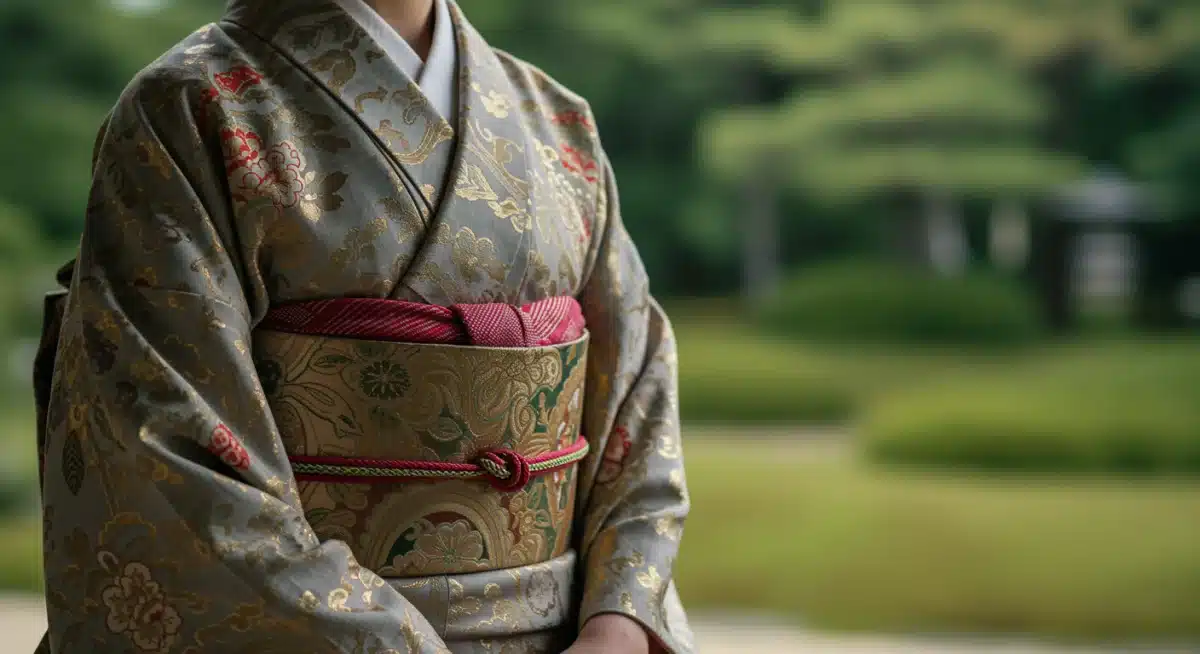
The kimono, the traditional Japanese garment, is a masterpiece of design, but in historical contexts, its patterns, colors, fabrics, and even the way it’s worn were highly regulated and meaningful. Certain colors were reserved for royalty or high-ranking officials, while specific patterns might indicate a family crest (mon) or a particular season.
- Fabric Type: Silk was for the wealthy and noble, cotton or hemp for commoners.
- Color Palette: Bright, vibrant colors often indicated youth or high status, while subdued tones might be for older individuals or those in mourning.
- Patterns and Motifs: Cranes symbolized longevity, cherry blossoms represented transient beauty, and family crests identified lineage.
- Layering: The number and combination of kimono layers (kasane) were dictated by rank and occasion, especially for court nobles during the Heian period.
The obi (sash) also played a significant role, its tying style and elaborate decoration often signaling marital status or age. For instance, an unmarried woman might wear a more elaborate and brighter obi tied in a particular fashion, while a married woman’s obi would be simpler and tied differently. These details, though subtle, were instantly recognizable to people of the time and are faithfully recreated in authentic Japanese historical dramas.
Hairstyles: Status, Profession, and Identity
Just as clothing, hairstyles in historical Japan were far from arbitrary. They were powerful symbols of identity, conveying a person’s social standing, profession, and even their marital status. For men, the samurai topknot (chonmage) is perhaps the most iconic, but its variations were numerous and significant. A samurai’s specific style of chonmage could indicate his rank, domain, or whether he was in service or a masterless ronin.
For women, hairstyles were even more elaborate and varied, changing significantly across different historical periods and social classes. In the Heian period, long, flowing hair was the ideal, while in the Edo period, intricate updos adorned with elaborate hairpins (kanzashi) became popular, often signaling a woman’s age, marital status, or even her profession, such as a geisha or courtesan.
The absence or presence of certain hair ornaments, the height and shape of an updo, or the style of a man’s topknot are all deliberate choices in Japanese historical dramas that reflect deep historical research. A character’s sudden change in hairstyle might indicate a significant life event, such as taking religious vows, entering marriage, or suffering a great loss. Recognizing these visual cues adds another layer of appreciation for the storytelling and the authenticity of the portrayal.
In essence, the apparel and coiffure seen in Japanese historical dramas are not mere costumes and props. They are integral to character development and world-building, offering a silent yet profound commentary on the historical period and the individuals within it. A keen eye for these details allows viewers to decode unspoken messages and gain a deeper understanding of the rich cultural tapestry being presented.
The Role of Rituals and Daily Practices
Beyond grand narratives and character interactions, Japanese historical dramas often subtly weave in the everyday rituals and practices that defined life in various historical eras. These might include tea ceremonies, martial arts training, religious observances, or even the way meals were prepared and consumed. While seemingly minor, these details are fundamental to portraying the authentic rhythm and ethos of historical Japanese society.
Understanding the context and significance of these rituals can provide a window into the values, beliefs, and daily routines of the people depicted. They show how tradition and discipline permeated every aspect of life, from the highest echelons of power to the simplest village existence. These practices are not just incidental; they are often symbolic expressions of character, theme, and the underlying philosophy of the era.
The Precision of the Tea Ceremony (Chanoyu)
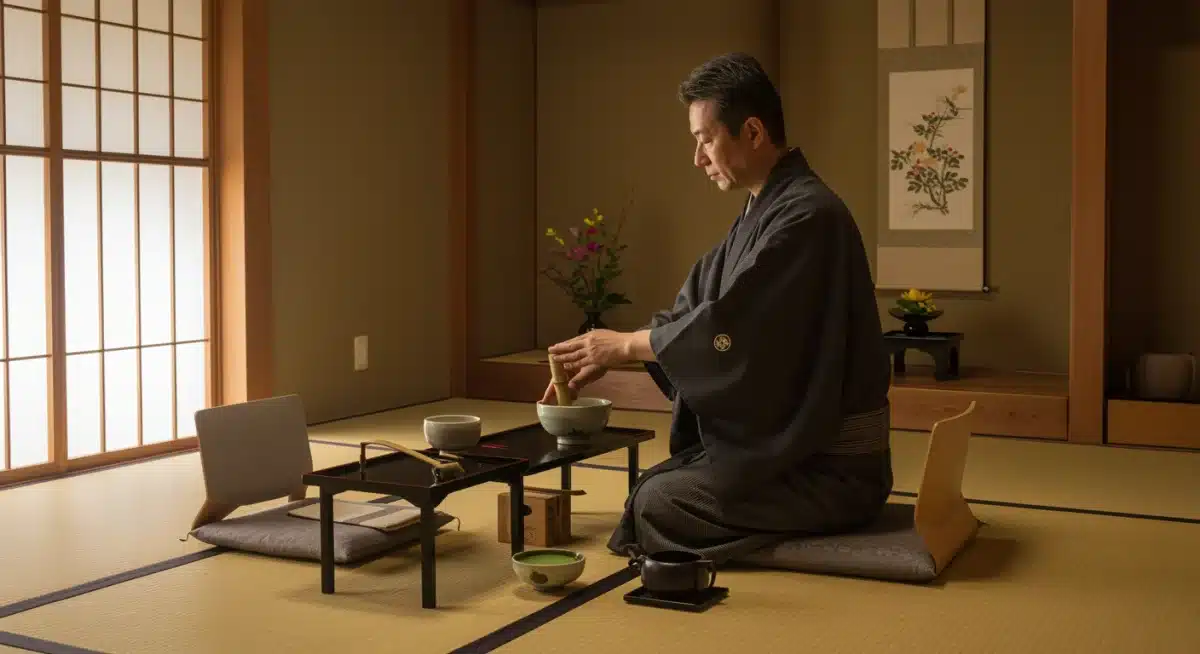
The Japanese tea ceremony, or Chanoyu, is much more than just preparing and serving tea; it is a highly ritualized art form embodying principles of harmony, respect, purity, and tranquility (wa, kei, sei, jaku). In many Japanese historical dramas, particularly those set in the Sengoku or Edo periods, tea ceremonies are featured, often serving as critical moments for negotiation, reflection, or even plotting.
- Utensils: Each utensil, from the tea bowl (chawan) to the whisk (chasen), is handled with specific, deliberate movements.
- Order of Operations: There is a strict sequence of steps for cleaning, preparing, and serving the matcha, reflecting discipline and mindfulness.
- Guest Interaction: Guests also follow specific etiquette, including how they receive and drink the tea, and how they appreciate the implements.
The precision and formality of the tea ceremony depicted in a drama can reveal a character’s discipline, aesthetic sensibility, and even their political acumen. A host’s choice of tea bowl, for instance, might convey a subtle message to a guest. Recognizing these layers of meaning transforms a beautiful scene into a deeply insightful one, showcasing the depth of cultural understanding presented in Japanese historical dramas.
Martial Arts and Bushido: More Than Just Fighting
Martial arts, particularly swordsmanship (kenjutsu), are central to many Japanese historical dramas, especially those focusing on the samurai. However, these portrayals often go beyond mere combat to illustrate the underlying philosophy of Bushido, the ‘way of the warrior.’ Bushido encompassed virtues like rectitude, courage, benevolence, respect, honesty, honor, and loyalty.
The training scenes, the duels, and even the way a samurai carries himself are often imbued with these principles. It’s not just about winning a fight; it’s about the manner in which one fights, the respect shown to an opponent, and the adherence to a code of conduct even in the face of death. A samurai’s posture, his grip on his katana, and his unwavering gaze can all communicate his adherence to Bushido.
Furthermore, the depiction of training rituals, such as repetitive forms or meditation, highlights the spiritual and philosophical dimensions of martial arts, which were integral to a samurai’s life. These elements show that martial prowess was inseparable from mental and spiritual discipline. Understanding this deeper connection enhances the appreciation for the struggles and triumphs of the samurai characters in Japanese historical dramas.
In essence, the rituals and daily practices portrayed in Japanese historical dramas are not just decorative elements. They are vital components that build an authentic historical world, revealing the values, disciplines, and spiritual dimensions of past Japanese societies. By observing these details, viewers gain a richer, more nuanced understanding of the historical periods and the characters who inhabit them, making the viewing experience truly immersive and educational.
Depiction of Family Structures and Clan Loyalty
The familial bonds and intricate clan loyalties are often at the heart of many Japanese historical dramas. Unlike modern individualistic societies, historical Japan placed immense importance on the family (ie) and the clan (ichizoku or han) as fundamental units of social organization. Understanding these structures is key to appreciating the motivations, conflicts, and sacrifices depicted in these narratives.
From the powerful daimyo families to humble peasant households, the collective good of the family or clan often superseded individual desires. This emphasis on group identity and loyalty shaped political alliances, economic decisions, and even personal relationships, providing a rich source of dramatic tension and emotional depth in historical storytelling.
The Concept of ‘Ie’ (Family) and Succession
The ‘ie’ or traditional Japanese household, was not merely a collection of individuals but a continuous entity spanning generations. Its preservation and prosperity were paramount. This often led to complex rules of succession, where the eldest son was typically expected to inherit, but exceptions were common if he was deemed unfit or if an adopted heir (yōshi) was brought in to ensure the family’s continuation.
- Patrilineal Emphasis: Succession typically followed the male line, with strong pressure to produce male heirs.
- Adoption as a Solution: If no male heir was available, adoption of an adult male from another family was a common practice to maintain the ‘ie.’
- Duty over Personal Desire: Individual members were expected to prioritize the family’s honor and survival over their personal happiness or romantic attachments.
These dynamics are frequently explored in Japanese historical dramas, with characters often grappling with the conflict between personal desires and familial duty. A character’s decision to marry for political alliance rather than love, or to sacrifice their own ambitions for the sake of their family, becomes far more poignant when the weight of the ‘ie’ concept is understood.
Clan Loyalty and Feudal Obligations
Beyond the immediate family, loyalty to one’s clan or feudal lord was a cornerstone of samurai society. This loyalty (chūgi) was often absolute, demanding unwavering service, obedience, and even self-sacrifice. The intricate web of alliances and rivalries between clans formed the backbone of feudal Japan, and thus, many historical dramas.
A samurai’s identity was often inextricably linked to his lord and domain. Betrayal of one’s lord was considered the gravest offense, leading to severe consequences not only for the individual but often for their entire family. Conversely, unwavering loyalty, even in the face of impossible odds, was celebrated as the highest virtue.
Stories of retainers avenging their lord’s death, or entire clans rising and falling based on their loyalty and strategic alliances, are common themes in Japanese historical dramas. Understanding the deep-seated nature of these loyalties helps explain character motivations and the often-harsh realities of feudal warfare and politics. It sheds light on why characters might make choices that seem extreme by modern standards but were entirely rational and honorable within their historical context.
The portrayal of family structures and clan loyalty in Japanese historical dramas is a profound reflection of historical Japanese values. These elements are not just plot devices but represent the very foundation of social order and individual identity during these periods. Recognizing their significance allows viewers to connect more deeply with the characters’ struggles and triumphs, appreciating the complex interplay between individual fate and collective destiny.
The Role of Religion and Spirituality
Religion and spirituality were deeply woven into the fabric of daily life and governance in historical Japan, and their subtle presence in Japanese historical dramas often goes unnoticed by casual viewers. Shinto, Japan’s indigenous religion, and Buddhism, introduced from the mainland, coexisted and profoundly influenced everything from political decisions to personal ethics, art, and architecture. Understanding their impact enriches the viewing experience, revealing deeper layers of meaning in character actions, cultural practices, and historical events.
These spiritual dimensions were not just abstract beliefs; they manifested in tangible ways, from the construction of temples and shrines to the rituals performed for protection, prosperity, or remembrance of the dead. Ignoring these religious undercurrents means missing a crucial aspect of what shaped historical Japanese society and its people.
Shinto: Connecting with Nature and Ancestors
Shinto, with its emphasis on the worship of kami (deities or spirits) residing in natural elements like mountains, trees, and rivers, and the veneration of ancestors, was an omnipresent force. In Japanese historical dramas, this often translates to characters showing respect for natural landscapes, visiting shrines for blessings or purification, or performing rituals to honor their forebears.
- Shrine Visits: Characters frequently visit Shinto shrines to pray for success in battle, safe childbirth, or good harvests.
- Purification Rituals: Symbolic purification (harae) might be depicted before important events or after perceived defilement.
- Ancestral Veneration: Respect for ancestors is shown through offerings, prayers, and adherence to family traditions, often influencing critical decisions.
The presence of torii gates, sacred ropes (shimenawa), and small altars in homes are visual cues to this spiritual landscape. Even subtle gestures, like a character pausing to admire a beautiful natural scene or expressing gratitude for a bountiful harvest, can be interpreted through the lens of Shinto beliefs. These elements demonstrate a deep-seated connection to the land and a reverence for the unseen forces that governed life.
Buddhism: Impermanence and Karma
Buddhism, particularly Zen Buddhism, had a profound impact on the samurai class and intellectual life, introducing concepts like impermanence (mujō), suffering (dukkha), and karma. These philosophical underpinnings often inform the stoicism, acceptance of fate, and readiness for death seen in samurai characters. Monks and temples frequently appear in Japanese historical dramas, serving as centers of learning, refuge, or even political influence.
The concept of impermanence, for example, can be seen in the appreciation of cherry blossoms (a common motif), symbolizing the fleeting nature of life and beauty. A samurai’s willingness to face death without fear often stems from a Buddhist understanding that life is transient and that one’s actions (karma) determine future existence. Characters seeking solace or guidance from Buddhist monks are not just seeking spiritual advice; they are engaging with a worldview that shaped their understanding of life and death.
Religious practices, like meditation (zazen) or chanting sutras, when depicted, are not just incidental details. They showcase a character’s internal world, their search for enlightenment, or their way of coping with the harsh realities of their time. The architectural grandeur of Buddhist temples, often serving as backdrops for pivotal scenes, further underscores the religion’s pervasive influence.
In summary, the religious and spiritual dimensions in Japanese historical dramas offer a profound insight into the characters’ inner lives and the cultural values of their eras. By recognizing the subtle nods to Shinto and Buddhist beliefs, viewers can gain a much deeper appreciation for the complex motivations and moral frameworks that guided historical Japanese society, turning a visual spectacle into a truly meaningful cultural exploration.
The Economic Realities and Daily Life of Commoners
While many Japanese historical dramas focus on the exploits of samurai and nobles, some of the most authentic details can be found in the portrayal of commoners’ daily lives and the economic realities that shaped their existence. These often-overlooked aspects provide a grounding perspective, reminding us that feudal Japan was sustained by the labor and ingenuity of its ordinary citizens. Understanding their struggles and routines offers a more complete picture of the historical period, moving beyond the grand political narratives.
These details, from agricultural practices to market interactions and the simple construction of homes, provide a vivid contrast to the opulent lives of the elite. They highlight the resilience, resourcefulness, and community spirit that were essential for survival in a challenging era.
Agricultural Practices and Food Production
The vast majority of Japan’s historical population were farmers, and their lives revolved around the agricultural cycle, primarily rice cultivation. Japanese historical dramas that accurately depict these practices show the laborious nature of rice farming, from planting seedlings in flooded paddies to harvesting the grains. These scenes are not just background; they underscore the fundamental economic base of the society.
- Rice as Staple: Rice was not just food but often a form of currency and a measure of wealth (koku).
- Seasonal Labor: The rhythm of life for commoners was dictated by the seasons, with specific tasks for planting, weeding, and harvesting.
- Simple Diet: Their diet typically consisted of rice, vegetables, fish, and fermented foods, reflecting resourcefulness and local availability.
The struggles with drought, famine, or heavy taxes imposed on harvests often form critical plot points, illustrating the precariousness of life for commoners. Observing the tools they used, their methods of irrigation, and their communal efforts in the fields provides a stark reminder of the foundational role agriculture played in feudal Japan. These portrayals offer a more holistic view of the society, showcasing how the prosperity of the samurai class was directly tied to the productivity of the farming class.
Marketplaces and Craftsmanship
Beyond agriculture, the bustling marketplaces and the skilled craftsmanship of artisans were vibrant centers of economic activity. Japanese historical dramas often feature markets filled with vendors selling various goods, from fresh produce and fish to textiles, pottery, and tools. These scenes are rich with details about trade, commerce, and the social interactions of the time.
The presence of specific crafts, like woodblock printing (ukiyo-e), sword making, or ceramic production, highlights the advanced skills and specialized labor within Japanese society. The tools, techniques, and even the apprenticeships shown in these dramas are often historically accurate, reflecting meticulous research into the material culture of the period. These details illuminate the ingenuity and artistic sensibilities of historical Japanese people.
The economic realities also extended to the payment systems. While rice was a primary commodity, copper coins and later gold and silver were also in circulation. The bargaining in markets, the exchange of goods, and the occasional depiction of debt or poverty all paint a realistic picture of economic life. These scenes provide context for understanding social mobility (or lack thereof) and the daily challenges faced by ordinary people, adding a layer of authenticity that goes beyond the heroics of samurai.
In conclusion, paying attention to the economic realities and daily lives of commoners in Japanese historical dramas offers a vital counterpoint to the often-glamorized world of the samurai. These details reveal the backbone of historical Japanese society, showcasing the hard work, resourcefulness, and community spirit that allowed it to thrive. It’s a testament to the depth of historical research when these aspects are portrayed with authenticity, enriching the viewer’s understanding of the entire historical landscape.
The Evolution of Warfare and Weaponry
Warfare was an inescapable reality for much of feudal Japan, and Japanese historical dramas frequently depict battles, duels, and military strategies. However, the authenticity lies not just in the spectacle of combat but in the nuanced evolution of warfare and weaponry throughout different periods. Understanding these changes, from early samurai tactics to the introduction of firearms, provides critical context for the conflicts portrayed and the historical accuracy of the narratives.
The development of specific weapons, armor, and military formations reflects technological advancements, strategic shifts, and the changing nature of battle itself. Overlooking these details means missing a significant aspect of the historical progression and the tactical brilliance (or blunders) that shaped Japan’s destiny.
From Bows and Swords to Firearms
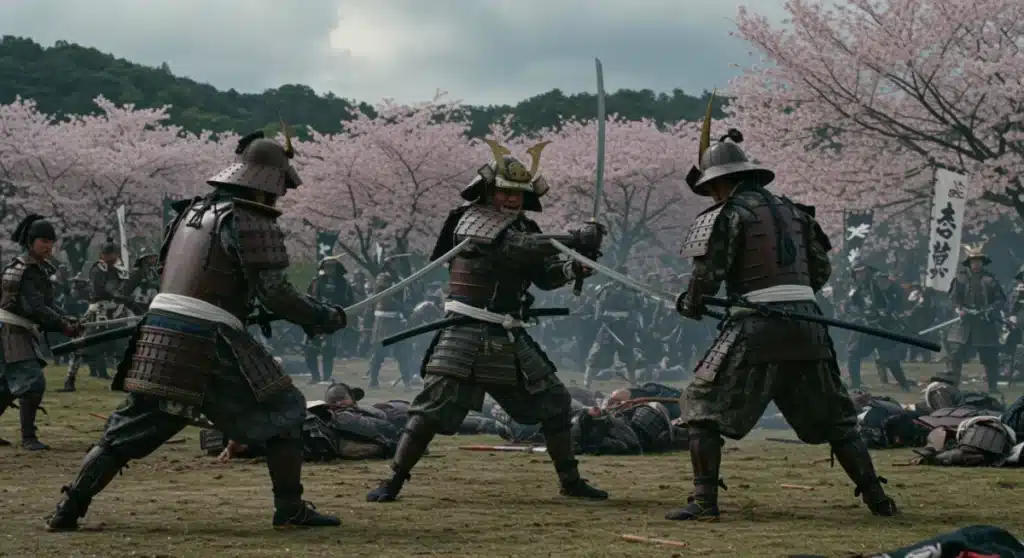
Early samurai warfare, particularly in the Heian and Kamakura periods, often involved horseback archery (kyūba no michi) and individual duels with swords (katana) and spears (yari). The emphasis was on individual skill and honor. As the Sengoku period (Warring States period) began, warfare evolved into large-scale conflicts involving thousands of soldiers, leading to changes in tactics and weaponry.
- Early Samurai: Emphasis on archery from horseback, followed by close-quarters combat with swords and spears.
- Sengoku Period: Rise of massed infantry, extensive use of spears (yari), and the introduction of the naginata for foot soldiers.
- Arrival of Firearms: The introduction of Portuguese arquebuses (tanegashima) in the mid-16th century revolutionized warfare, leading to new formations and strategies, most famously employed by Oda Nobunaga.
The shift from individual combat to organized infantry formations and the integration of firearms dramatically altered battlefields. A drama depicting a Sengoku battle without the presence of arquebuses, or showing samurai of that era relying solely on traditional swords in a large-scale engagement, would be historically inaccurate. Authentic Japanese historical dramas often meticulously recreate these weapon systems and their tactical deployment.
Armor and Military Organization
Just as weaponry evolved, so too did samurai armor (yoroi). Early armor was often lighter, designed for mobility on horseback. As warfare became more infantry-focused and involved massed formations, armor became heavier and more protective, covering more of the body. The design of helmets (kabuto) also changed, often featuring elaborate crests (datemono) that identified the wearer’s clan or position.
Military organization also saw significant changes. From small bands of retainers, armies grew into complex forces with various units: archers, spearmen, arquebusiers, and cavalry. The role of strategic commanders (gunshi) became paramount, and the use of banners (sashimono) and war cries for communication and morale was crucial. The accurate depiction of these organizational structures and the visual elements of battle adds immense authenticity.
Observing the types of armor worn by different ranks, the way armies are deployed on the battlefield, and the tactical decisions made by commanders can provide a deeper understanding of the historical period. For example, a drama set during the Genpei War would feature different armor and tactics than one set during the Siege of Osaka. These specific historical details in Japanese historical dramas are not merely aesthetic choices but are fundamental to portraying the period’s military realities with accuracy and depth.
In conclusion, the evolution of warfare and weaponry is a dynamic and essential aspect of Japanese historical dramas. By paying attention to the specific types of arms and armor, the tactical formations, and the impact of technological advancements like firearms, viewers can gain a far more accurate and nuanced understanding of the conflicts that shaped historical Japan. This attention to military detail transforms battle scenes from mere action sequences into historically informed portrayals of strategic genius and human endurance.
The Influence of Art and Aesthetics on Daily Life
The profound influence of art and aesthetics on daily life is another authentic detail often subtle in Japanese historical dramas. From the arrangement of a garden to the choice of a scroll in an alcove (tokonoma), aesthetic principles permeated every aspect of historical Japanese culture. These weren’t mere decorations; they were expressions of philosophy, social status, and a deep appreciation for beauty, often rooted in Zen Buddhist concepts of simplicity and naturalness.
Understanding these aesthetic sensibilities helps contextualize the environments and objects characters interact with, revealing a rich cultural tapestry. It shows how beauty was not confined to grand temples or artworks but was an integral part of everyday existence, shaping spaces and experiences.
Gardens: Microcosms of the Universe
Japanese gardens, whether dry landscape (karesansui) or stroll gardens, are carefully designed spaces intended for contemplation and aesthetic pleasure. In Japanese historical dramas, these gardens often serve as serene backdrops for crucial conversations, moments of reflection, or even dramatic confrontations. Their design elements, such as rocks, water, and carefully pruned trees, are often symbolic.
- Symbolism: Rocks can represent mountains or islands, while raked sand often symbolizes water or clouds.
- Miniaturization: Gardens often recreate natural landscapes in miniature, inviting contemplation of the vastness of nature.
- Seasonal Changes: The garden’s appearance changes with the seasons, reflecting the Buddhist concept of impermanence.
The presence and style of a garden in a drama can indicate the owner’s wealth, spiritual inclinations, and aesthetic taste. A meticulously maintained garden suggests discipline and a refined sensibility, while a wilder, more natural garden might reflect a different philosophical outlook. Recognizing these details transforms a beautiful setting into a meaningful character in its own right, speaking volumes about the individuals who inhabit it.
Interior Design and the Tokonoma
Traditional Japanese interior design, particularly in aristocratic and samurai homes, emphasized minimalism, natural materials, and the careful placement of objects. The tokonoma, an alcove in a reception room, was a central feature where art was displayed. This was not just a decorative space; it was a focal point for aesthetic appreciation and often conveyed a subtle message to guests.
The items displayed in the tokonoma—a hanging scroll (kakemono), a flower arrangement (ikebana), or a ceramic piece—were chosen with great care, often reflecting the season, the occasion, or the host’s cultivated taste. In Japanese historical dramas, a character’s appreciation for these elements, or their indifference, can reveal aspects of their personality or their understanding of cultural norms.
The use of sliding doors (fusuma and shoji), tatami mats, and natural wood finishes all contribute to an aesthetic of understated elegance and harmony with nature. These elements are often recreated with precision in authentic dramas, providing a visual language that speaks to the historical period’s values. By noticing how characters interact with and appreciate these aesthetic details, viewers can gain a deeper insight into the cultural and philosophical underpinnings of historical Japanese society.
In essence, the influence of art and aesthetics on daily life in Japanese historical dramas is a powerful, albeit subtle, detail. It showcases a culture where beauty and philosophical depth were intertwined with everyday existence. Recognizing these elements allows for a richer appreciation of the visual storytelling and a deeper understanding of the values that shaped historical Japanese society, enriching the entire viewing experience.
| Key Detail | Brief Description |
|---|---|
| Social Hierarchy & Etiquette | Subtle bows, specific language, and gestures indicate social status, respect, or defiance among characters. |
| Clothing & Hairstyles | Kimono patterns, fabric, and hair ornaments convey rank, profession, marital status, and period. |
| Rituals & Daily Practices | Tea ceremonies, martial arts training, and religious observances reflect values and daily rhythms. |
| Economic Realities | Depictions of agriculture, marketplaces, and craftsmanship highlight commoner life and societal foundations. |
Frequently Asked Questions About Japanese Historical Dramas
Japanese historical dramas, or jidaigeki, frequently cover periods like the Sengoku (Warring States) era, known for its samurai battles and political intrigue; the Edo period, characterized by samurai rule and urban culture; and the Meiji Restoration, marking the end of feudalism and modernization. Each era offers distinct cultural and social backdrops for storytelling.
The level of historical accuracy in Japanese historical dramas varies greatly. While many productions strive for meticulous detail in costumes, settings, and etiquette, others take creative liberties for dramatic effect. Reputable series often consult historians to ensure authenticity, especially in major events and cultural portrayals, balancing historical fact with engaging narrative.
The samurai are central figures in many Japanese historical dramas, embodying the Bushido code of honor, loyalty, and discipline. Their stories often explore themes of duty, sacrifice, and the complexities of feudal society. They serve as cultural icons, representing the martial and moral ideals of historical Japan, and their struggles drive many compelling narratives.
Yes, some common misconceptions include over-glamorizing samurai life, simplifying complex political motivations, or anachronistic portrayals of technology or social norms. For instance, the widespread use of katana as a primary battlefield weapon is often exaggerated; spears and bows were more common. Accurate dramas strive to avoid such historical inaccuracies.
To identify authentic details, pay attention to subtle cues like bowing etiquette, specific kimono patterns or colors, variations in hairstyles, and the depiction of daily rituals such as tea ceremonies or agricultural practices. Researching the specific historical period portrayed can also help you recognize accurate cultural, social, and economic nuances, enhancing your appreciation.
Conclusion
Exploring the subtle yet profound authentic details in Japanese historical dramas transforms the viewing experience from passive entertainment into an enriching cultural journey. By paying close attention to the nuances of social hierarchy, the symbolic language of clothing and hairstyles, the ingrained daily rituals, the economic realities of commoners, and the evolution of warfare, viewers gain a deeper, more comprehensive understanding of Japan’s past.
These elements, meticulously recreated by dedicated filmmakers and historians, are not just background dressing; they are vital components that breathe life into historical narratives, offering a genuine window into the values, struggles, and triumphs of various eras. Recognizing these intricate details allows for a far greater appreciation of the artistry, research, and cultural significance embedded within every frame of these captivating historical masterpieces, truly bringing history to life on screen.