Mastering Japanese Drama: Subtitle Nuances for Maximum Enjoyment
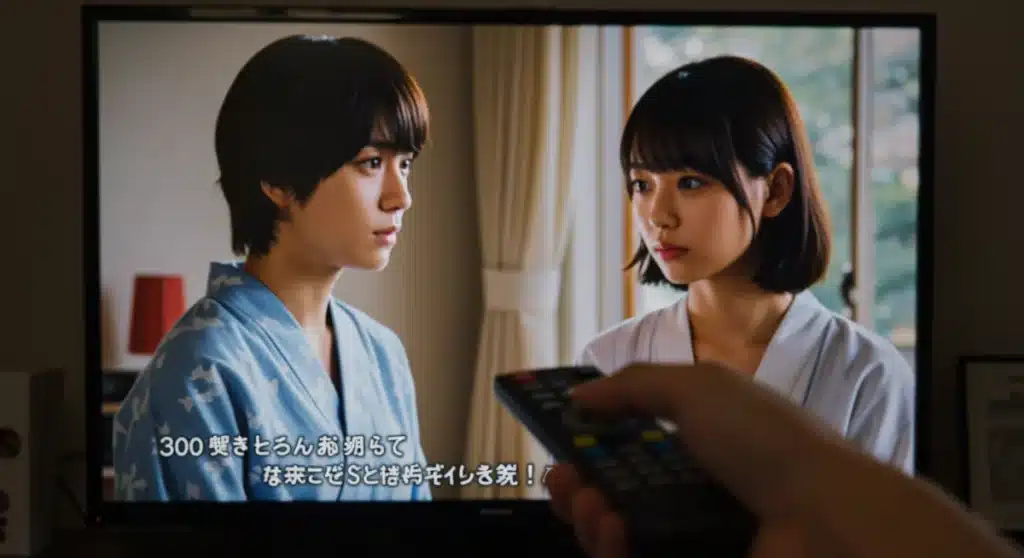
Understanding the intricacies of Japanese Drama Subtitles is paramount for truly appreciating the nuanced storytelling and cultural depth inherent in these productions, transforming a passive viewing into an immersive and informed experience.
Have you ever found yourself watching a compelling Japanese drama, gripped by the story, only to feel like something vital is slipping through the cracks? Perhaps a joke didn’t quite land, a dramatic confession felt a little off, or a cultural reference left you scratching your head. This feeling of disconnect often stems from the complex world of Japanese Drama Subtitles.
While subtitles are our indispensable bridge to non-native content, they are not always a perfect mirror of the original. This article delves into the fascinating, sometimes frustrating, but ultimately rewarding journey of understanding Japanese drama subtitles for maximum enjoyment, ensuring you don’t miss a beat of your favorite J-dramas.
The Linguistic Labyrinth: Why Japanese is Hard to Translate
Japanese, as a language, possesses a unique structure and cultural embeddedness that makes direct translation a formidable challenge. It’s not merely about swapping words; it’s about conveying layers of meaning, respect, and context that are deeply ingrained in the language itself. This linguistic labyrinth often presents significant hurdles for subtitle creators, directly impacting the viewer’s experience.
One of the primary difficulties lies in the concept of honorifics and speech levels. Japanese has an intricate system of polite language (keigo) that varies depending on the speaker’s relationship to the listener, their social status, and the formality of the situation. Translating these nuances into English, which lacks such a system, often results in a loss of character dynamics and relationships. A simple ‘you’ in English can obscure whether a character is speaking to a superior, an equal, or a subordinate, thereby altering the perceived power dynamic or intimacy.
Honorifics and Social Context
The use of suffixes like -san, -kun, -chan, and -sama carries a wealth of information about how characters perceive each other. Omitting or simplifying these in subtitles can flatten character interactions. For instance, a character using ‘-chan’ for a female friend versus ‘-san’ for a colleague immediately tells a Japanese speaker about their relationship, which English subtitles struggle to convey without cumbersome explanations.
- -san: General polite suffix, used for adults.
- -kun: Used for younger males, or superiors addressing subordinates.
- -chan: Affectionate suffix, often for children, close female friends, or pets.
- -sama: Highly respectful, for deities, customers, or those of very high status.
Beyond honorifics, the very structure of Japanese sentences can be a challenge. Verbs often come at the end, and subjects can be omitted if understood from context. This SOV (Subject-Object-Verb) structure contrasts sharply with English’s SVO (Subject-Verb-Object), requiring translators to rephrase sentences significantly, sometimes altering emphasis or flow. Moreover, the ambiguity inherent in Japanese, where context often dictates meaning, demands a translator’s interpretive skill rather than a simple word-for-word exchange.
In conclusion, the fundamental differences between Japanese and English, particularly in social linguistics and sentence structure, create a complex environment for accurate subtitle translation. Recognizing these inherent challenges is the first step toward appreciating the efforts of translators and understanding why some nuances may inevitably be lost.
The Art of Subtitling: Balancing Accuracy and Readability
Subtitling is an intricate dance between linguistic accuracy and practical readability. A translator’s job isn’t just about converting words; it’s about conveying meaning, tone, and cultural context within strict character limits and display times. This often requires making difficult choices, prioritizing certain elements over others to ensure the viewer can follow the story without constantly pausing to read.
The primary constraint is time. Subtitles must appear on screen long enough to be read but disappear quickly enough not to obscure subsequent dialogue. This means lengthy explanations of cultural concepts or intricate linguistic nuances are often condensed or omitted entirely. A translator might choose to focus on the plot-driving dialogue, sacrificing some of the subtle character development or comedic timing that relies on specific Japanese phrasing.
Literal vs. Interpretive Translation
There are two main approaches to subtitling: literal and interpretive. A literal translation attempts to stay as close as possible to the original Japanese wording, which can sometimes result in awkward or unclear English. An interpretive translation, on the other hand, aims to convey the spirit and meaning of the original, even if it means deviating from a direct word-for-word translation. Both have their merits and drawbacks.
- Literal Translation: Good for learners of Japanese, but can be clunky for native English speakers.
- Interpretive Translation: More natural-sounding English, but risks losing some original nuance or specific cultural references.
- Fan Subtitles: Often more interpretive and include translator notes, but can be inconsistent in quality.
Furthermore, the cultural background of the translator plays a significant role. A translator deeply familiar with Japanese culture can more effectively bridge the gap between languages, understanding when to explain a cultural reference and when to find an English equivalent that evokes a similar feeling. Without this deep cultural understanding, some jokes, proverbs, or social interactions might fall flat or be misunderstood by the audience. The challenge is to find that sweet spot where the essence of the Japanese drama is preserved while making it accessible and enjoyable for an English-speaking audience.
In essence, subtitling is a highly skilled craft that demands not only linguistic proficiency but also a keen sense of cultural awareness and a pragmatic understanding of audience consumption. The choices made by subtitlers directly shape our perception and enjoyment of Japanese dramas.
Decoding Cultural Context: Beyond the Words
Japanese dramas are rich tapestries woven with threads of deep cultural context. Many expressions, gestures, and social situations hold specific meanings that are not immediately apparent to an international audience. Understanding these unspoken rules and cultural nuances is paramount to fully grasp the characters’ motivations, relationships, and the overall narrative. Subtitles, by their very nature, can only capture so much of this, leaving the viewer to fill in the gaps.
Consider the concept of ‘honne’ and ‘tatemae’ – the true feelings versus the public facade. Characters in Japanese dramas often express themselves indirectly, using ‘tatemae’ to maintain harmony, while their ‘honne’ is conveyed through subtle cues, facial expressions, or actions. A direct English translation of their dialogue might miss the underlying ‘honne,’ leading to a misinterpretation of their true intentions or feelings. This requires the viewer to engage actively, looking beyond the literal translation to infer deeper meanings.
Implicit Communication and Social Norms
Japanese communication often relies on implication rather than explicit statements. What is left unsaid can be as important as what is said. This indirectness, coupled with specific social norms, can be a major hurdle for understanding through subtitles alone. For instance, bowing is a complex form of communication, with different depths and durations conveying varying degrees of respect, apology, or gratitude. While subtitles might mention a bow, they cannot fully convey its intricate social weight.
- Indirectness: Often used to avoid confrontation or maintain harmony.
- Group Harmony (Wa): Prioritizing group well-being over individual desires.
- Seasonal References: Symbolism tied to seasons, flowers, or traditional events.
Furthermore, many Japanese dramas incorporate traditional festivals, historical events, or specific social rituals that might be unfamiliar to Western viewers. While some subtitle tracks might include translator’s notes or on-screen explanations, these are not always available or sufficient. Without this background knowledge, certain plot points or character reactions might seem illogical or exaggerated. It’s in these moments that a little independent research can significantly enhance the viewing experience.
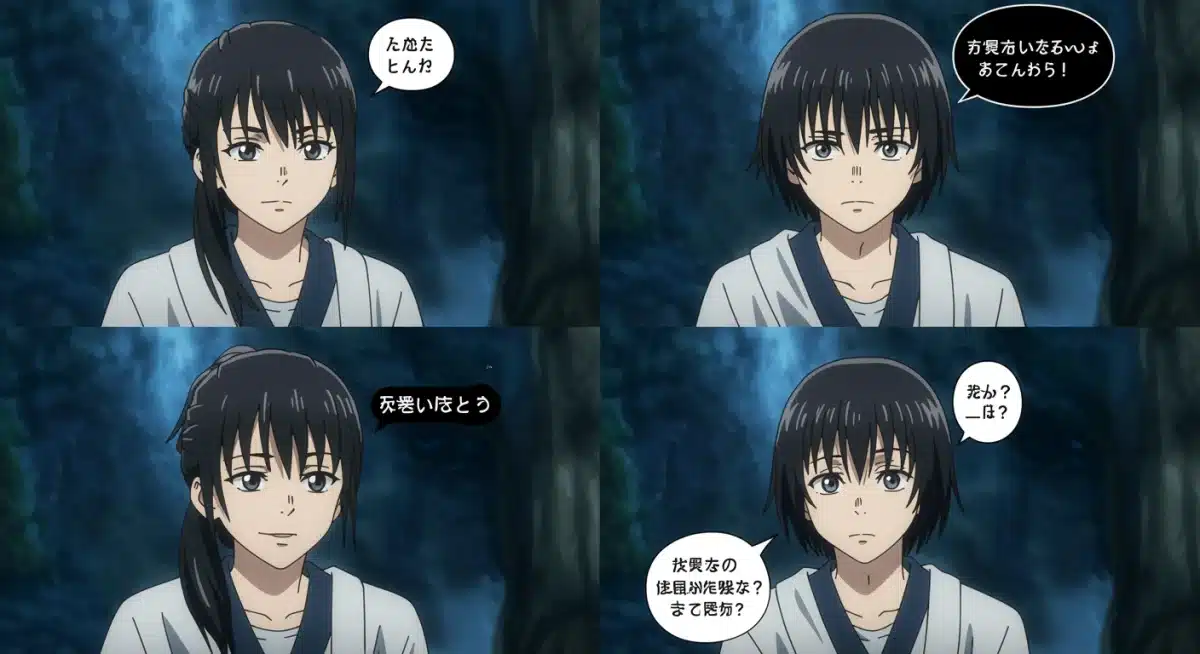
Ultimately, fully appreciating Japanese dramas goes beyond merely reading the subtitles. It involves an active engagement with the cultural context, an openness to different communication styles, and a willingness to explore the rich tapestry of Japanese society that these shows portray. The subtitles serve as a guide, but the deeper understanding comes from the viewer’s own cultural curiosity.
Common Subtitle Pitfalls and How to Navigate Them
Even with the best intentions, subtitles can sometimes fall short, leading to common viewing pitfalls. Recognizing these issues and knowing how to navigate them can significantly improve your experience with Japanese dramas. From mistranslations to cultural gaps, being an informed viewer empowers you to get the most out of your chosen series.
One frequent pitfall is the prevalence of overly literal translations. While aiming for accuracy, these can sometimes result in English that sounds unnatural, stilted, or even nonsensical. This is often seen when Japanese idioms or proverbs are translated word-for-word, losing their intended meaning in the process. For example, a phrase like ‘saru mo ki kara ochiru’ (even monkeys fall from trees) might be literally translated, but its idiomatic meaning (‘even experts make mistakes’) is far clearer.
Identifying and Overcoming Translation Inconsistencies
Another common issue arises from inconsistencies, especially in fan-subtitled content or when different teams translate different parts of a long-running series. Character names, honorifics, or recurring phrases might be translated differently, causing confusion. Furthermore, slang and regional dialects can be particularly challenging to subtitle, often being replaced with generic English equivalents that lose the original flavor.
- Mistranslations: Literal translations of idioms, or errors in understanding context.
- Inconsistent Terminology: Varying translations for names or key concepts across episodes.
- Lack of Nuance: Simplification of complex emotions or social dynamics.
To navigate these pitfalls, being an active viewer is key. If a line of dialogue seems odd or a character’s reaction doesn’t quite make sense, consider if a cultural nuance might be missing. Sometimes, cross-referencing with other subtitle sources (if available) can offer a different perspective. Engaging with online communities dedicated to J-dramas can also provide valuable insights and explanations for cultural references that might have been lost in translation. Ultimately, approaching subtitles with a critical yet open mind allows for a deeper appreciation of the content.
By being aware of these common subtitle challenges, viewers can develop strategies to overcome them, ensuring a richer and more authentic engagement with Japanese drama narratives. It’s about being an educated consumer of translated media.
Enhancing Your J-Drama Experience: Tips for Viewers
To truly maximize your enjoyment of Japanese dramas, it’s beneficial to adopt certain viewing strategies that go beyond simply reading the text on screen. These tips aim to help you bridge the linguistic and cultural gaps, allowing for a more immersive and appreciative experience of these captivating stories.
Firstly, embrace the visual storytelling. Japanese dramas, much like their cinematic counterparts, often rely heavily on non-verbal cues, facial expressions, body language, and cinematography to convey emotions and plot points. Don’t just focus on the subtitles; observe the actors’ performances, the camera angles, and the overall aesthetic. These elements frequently communicate what words cannot, especially when subtitles are constrained by space or time. A subtle glance or a change in posture can reveal more than a translated line of dialogue.
Active Learning and Community Engagement
Consider diving a little deeper into Japanese culture and language. Even a basic understanding of common Japanese phrases, honorifics, or cultural concepts can unlock layers of meaning that subtitles might gloss over. There are numerous online resources, from language learning apps to cultural blogs, that can provide this valuable context. This active learning transforms viewing into an educational and enriching experience.
- Observe Non-Verbal Cues: Pay attention to body language, expressions, and gestures.
- Research Cultural References: Look up unfamiliar traditions, historical events, or social norms.
- Engage with Fan Communities: Discuss episodes, ask questions, and learn from other viewers.
Furthermore, don’t be afraid to experiment with different subtitle sources if available. Official streaming platforms generally offer high-quality translations, but sometimes fan-made subtitles can provide a more nuanced or culturally specific interpretation, often including helpful translator’s notes. While fan subtitles can vary in quality, some are exceptionally well-researched and offer a unique perspective. The goal is to find what works best for your personal viewing style and helps you connect most deeply with the drama.
By combining active observation with a willingness to learn and explore, you can transform your Japanese drama viewing from a passive activity into a rich, engaging, and deeply satisfying cultural immersion. These strategies empower you to navigate the complexities of translation and truly appreciate the artistry of J-dramas.
The Future of Subtitling: AI, Fan Translations, and Official Releases
The landscape of subtitling is continuously evolving, driven by technological advancements, the rise of global streaming platforms, and the enduring passion of fan communities. Understanding these trends provides insight into how Japanese drama subtitles might improve and change in the coming years, impacting viewer experience and accessibility.
Artificial intelligence (AI) is rapidly transforming the translation industry. AI-powered translation tools are becoming increasingly sophisticated, offering faster and more efficient initial translations. While still far from perfect, especially with nuanced languages like Japanese, AI can handle basic sentence structures and vocabulary, providing a foundation that human translators can then refine. This could lead to quicker releases of subtitled content and potentially more consistent translation quality across large volumes of material.
The Role of Fan Translators and Official Platforms
Fan translators have historically played a crucial role in bringing Japanese dramas to international audiences, often providing subtitles long before official releases. Their dedication and cultural insights frequently result in translations that are deeply appreciated by viewers, sometimes even including cultural notes that enhance understanding. The challenge for fan translations lies in their variability in quality and consistency.
- AI Translation: Offers speed and efficiency, but requires human refinement for nuance.
- Fan Translations: Often rich in cultural context, but can be inconsistent in quality and legality.
- Official Releases: Generally high quality and legally sound, but can be slower and sometimes more conservative in translation choices.
Official streaming platforms are investing heavily in professional subtitling services, aiming for high standards of accuracy and cultural appropriateness. As the global demand for Japanese content grows, these platforms are likely to refine their processes, perhaps incorporating AI tools to assist human translators, thereby blending efficiency with quality. The future likely holds a hybrid approach, where advanced AI tools support skilled human translators, leading to faster, more accurate, and culturally sensitive subtitles for Japanese dramas.
In conclusion, the future of Japanese drama subtitles is dynamic and promising. The ongoing interplay between technology, professional services, and passionate fan communities will continue to shape how we experience and understand these beloved stories, making them more accessible and enjoyable for a global audience.
Connecting Through Language: The Universal Appeal of J-Dramas
Despite the linguistic and cultural barriers, Japanese dramas have cultivated a fervent global following, proving that compelling storytelling transcends borders. The universal appeal of J-dramas lies in their ability to explore fundamental human experiences, emotions, and societal themes that resonate with viewers regardless of their background. Subtitles, imperfect as they may be, serve as the vital conduit that allows these powerful narratives to reach and connect with diverse audiences.
Japanese dramas often delve into themes of family bonds, friendship, love, personal growth, societal pressures, and the pursuit of dreams with a unique sensibility. Whether it’s a heartwarming slice-of-life, an intense psychological thriller, or a fantastical romance, the core human emotions portrayed are universally recognizable. A character’s struggle with self-doubt, their joy in achieving a goal, or their heartbreak over a loss—these are feelings that transcend language and culture, allowing viewers to empathize deeply.
Beyond Entertainment: Cultural Exchange and Empathy
Furthermore, J-dramas offer a window into Japanese society, providing insights into its customs, values, educational system, work culture, and everyday life. For many international viewers, these dramas are their primary exposure to Japan, fostering a sense of cultural exchange and understanding. Even when subtitles cannot perfectly translate every linguistic nuance, the visual storytelling and emotional performances often convey enough for the viewer to grasp the essence of the message.
- Universal Themes: Love, friendship, family, ambition, and loss resonate globally.
- Emotional Depth: Characters’ internal struggles and triumphs are universally relatable.
- Cultural Insight: Offers a unique perspective into Japanese society and values.
The shared experience of watching a Japanese drama, even with the aid of subtitles, creates a sense of community among fans worldwide. Online forums, social media groups, and fan conventions are vibrant spaces where viewers discuss plot points, share theories, and celebrate their favorite shows, all united by their appreciation for these stories. This collective engagement highlights the power of J-dramas to connect people across linguistic divides, fostering empathy and mutual appreciation for different cultures.
In conclusion, the enduring popularity of Japanese dramas, despite the inherent challenges of subtitle translation, is a testament to the universal power of storytelling. Subtitles, while imperfect, enable a connection that transcends linguistic differences, allowing global audiences to experience the rich narratives and cultural insights that J-dramas so beautifully offer.
| Key Aspect | Brief Description |
|---|---|
| Linguistic Challenges | Japanese honorifics, sentence structure, and context-dependent meanings pose significant translation hurdles. |
| Subtitling Art | Balancing literal accuracy with readability and cultural context within strict character limits. |
| Cultural Nuances | Understanding implicit communication, social norms, and cultural references for deeper appreciation. |
| Viewer Strategies | Actively observing visuals, researching culture, and engaging with communities enhance viewing. |
Frequently Asked Questions About Japanese Drama Subtitles
This often happens due to overly literal translations of Japanese idioms, honorifics, or sentence structures that don’t directly map to English. Translators must balance accuracy with readability, and sometimes the literal approach can make English sound stilted, losing the original flow and natural expression. Cultural context is also frequently difficult to convey directly.
Japanese honorifics convey crucial information about character relationships, social status, and formality. Since English lacks direct equivalents, subtitles often omit them or simplify them, which can flatten character dynamics. Understanding their presence in the original dialogue helps viewers infer these subtle social cues, even if not explicitly translated.
It varies greatly. Fan-made subtitles can sometimes offer more culturally nuanced translations and include helpful translator’s notes, as they are often created by passionate individuals with deep cultural knowledge. However, their quality can be inconsistent, and they may lack the professional editing and legal backing of official releases. Official subtitles generally ensure higher consistency and accuracy.
To deepen your understanding, consider doing brief research on unfamiliar cultural references, historical events, or common Japanese customs mentioned in the drama. Engaging with online J-drama communities can also be immensely helpful, as experienced viewers often explain these nuances. Paying attention to visual cues and character reactions can also provide context.
AI translation tools are becoming more advanced, offering speed and efficiency in generating initial subtitle drafts. While AI still struggles with complex cultural nuances and idiomatic expressions, it can significantly assist human translators by handling the bulk of the literal translation, allowing human experts to focus on refining the cultural and contextual accuracy, leading to faster and potentially higher-quality subtitles.
Conclusion
Navigating the world of Japanese drama subtitles is an enriching journey that extends beyond mere linguistic conversion. It involves appreciating the intricate dance between languages, understanding the subtle art of translation, and actively engaging with the rich cultural tapestry that underpins every narrative.
While subtitles serve as an indispensable gateway, recognizing their inherent limitations and actively seeking to understand the deeper cultural and linguistic contexts can transform your viewing experience from passive consumption into a truly immersive and deeply satisfying appreciation of Japanese storytelling. By embracing these insights, you unlock the full potential of J-dramas, ensuring that very little is truly lost in translation.