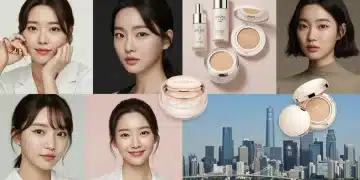
Korean Dramas and US Beauty: A Deep Dive into K-Beauty’s Impact
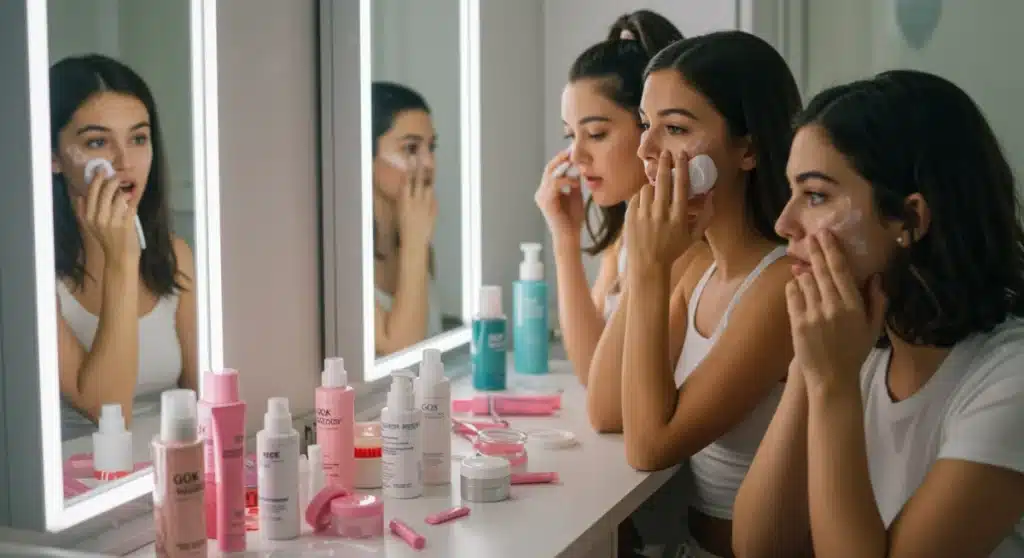
Korean dramas are dramatically influencing US beauty standards by popularizing multi-step skincare routines, natural-looking makeup, and a focus on healthy, radiant skin, thereby introducing a new aesthetic paradigm.
Have you ever found yourself mesmerized by the flawless complexions and subtle, elegant makeup of your favorite K-drama stars? It’s more than just entertainment; the rising popularity of these shows in the United States is profoundly impacting and reshaping American beauty ideals. This exploration delves into The Influence of Korean Dramas on US Beauty Standards: A Deep Dive, examining how these captivating narratives are fostering a significant shift in what Americans consider beautiful.
The Hallyu Wave: A Global Phenomenon Reaching US Shores
The Hallyu Wave, or Korean Wave, refers to the global spread of South Korean culture since the 1990s. Initially, this phenomenon gained traction across Asia, but in recent years, its influence has undeniably permeated Western markets, particularly the United States. Korean dramas, with their compelling storylines, high production values, and charismatic actors, have played a pivotal role in this cultural expansion. This section explores how K-dramas became a cultural touchstone in the US.
What began as a niche interest among specific communities has blossomed into a mainstream fascination. Streaming platforms like Netflix, Viki, and Hulu have made K-dramas readily accessible to millions of American viewers, transcending language barriers through subtitles and dubbing. This accessibility has introduced a broader audience to South Korean aesthetics, lifestyles, and, crucially, beauty practices, setting the stage for a significant cultural exchange.
The rise of K-drama viewership in the US
The escalating viewership of K-dramas in the US is not merely anecdotal; it is backed by substantial data. Reports indicate a significant surge in demand for Korean content, with many K-dramas consistently ranking among the most-watched non-English language shows. This widespread consumption means that American audiences are regularly exposed to the beauty ideals portrayed on screen, leading to a natural curiosity and desire to emulate these looks.
- Increased availability on major streaming platforms.
- Growing interest in diverse storytelling and cultural narratives.
- Social media amplification of K-drama stars and their beauty.
As more Americans tune into these captivating series, they are not just following plotlines; they are absorbing visual cues about beauty, fashion, and self-care. This constant exposure slowly but surely chips away at pre-existing beauty norms, introducing new benchmarks for skin health, makeup application, and overall appearance. The Hallyu Wave, through its dramatic storytelling, acts as a powerful conduit for these new beauty standards.
Skincare Revolution: From American Simplicity to K-Beauty’s Multi-Step Regimen
For decades, American skincare was largely characterized by simplicity: cleanse, tone, moisturize. While effective for some, it often lacked the nuanced approach seen in other cultures. The advent of K-dramas in the US has fundamentally altered this perspective, introducing a comprehensive, multi-step regimen that prioritizes prevention, hydration, and long-term skin health. This shift represents a significant departure from traditional American beauty practices.
K-beauty, short for Korean beauty, is now synonymous with innovative products and elaborate routines. American consumers, inspired by the radiant, seemingly poreless skin of K-drama leads, have eagerly embraced this new philosophy. The focus has moved from merely treating problems to cultivating a healthy skin barrier and achieving a natural glow from within.
The 10-step skincare routine and its impact
Perhaps the most iconic contribution of K-beauty is the popularized 10-step skincare routine. While not every American adopts all ten steps daily, the concept has undeniably influenced how many approach their skincare. It emphasizes layering products, each with a specific function, to achieve optimal results. This meticulous approach was initially daunting but has been embraced by a growing number of beauty enthusiasts.
- Double cleansing: removing oil-based and water-based impurities.
- Essences and serums: targeting specific skin concerns with concentrated ingredients.
- Sheet masks: providing intense hydration and nourishment.
- Sun protection: a non-negotiable step for anti-aging and skin health.
The emphasis on hydration and gentle care, rather than harsh treatments, resonates deeply with many who previously struggled with aggressive routines. K-dramas showcase characters whose beauty often appears effortless, a direct result of this dedicated skincare. This aspirational image encourages viewers to invest time and resources into achieving similar results, leading to a boom in K-beauty product sales and a widespread reevaluation of personal skincare habits.
Makeup Trends: Embracing Natural Radiance and Subtle Enhancements
Beyond skincare, Korean dramas have also significantly influenced makeup trends in the United States. While American makeup historically leaned towards heavier coverage and dramatic contours, K-dramas champion a more natural, youthful, and radiant aesthetic. This shift emphasizes enhancing one’s natural features rather than masking them, promoting a fresh and dewy look that many find appealing and achievable.
The ‘no-makeup’ makeup look, a staple in K-dramas, focuses on achieving a clear, even complexion with subtle enhancements. This includes luminous skin, softly defined eyes, and gradient lips. American consumers are increasingly moving away from heavy foundations and elaborate eye makeup in favor of lighter alternatives that allow their natural skin to shine through, a direct reflection of K-drama influences.
The ‘glass skin’ phenomenon and its adoption
‘Glass skin,’ a term originating from K-beauty, describes an intensely smooth, luminous, and translucent complexion that resembles a piece of glass. This ideal has become a highly sought-after look in the US, driven by its prominent display in Korean dramas. Achieving glass skin requires a combination of diligent skincare and strategic makeup application, primarily focusing on hydration and light-reflecting products.
- Cushion compacts: offering lightweight coverage with a dewy finish.
- Lip tints: providing a natural, buildable pop of color.
- Aegyo sal (cute eye fat) techniques: subtly enhancing the under-eye area for a youthful look.
The popularity of these specific makeup techniques and products is a testament to the strong visual influence of K-dramas. Viewers see their favorite characters embodying these beauty ideals and are inspired to experiment with similar styles. This has led to a surge in demand for K-beauty makeup brands in the US, as well as American brands adapting their product lines to cater to these emerging preferences for natural radiance and subtle enhancement.
Redefining Beauty Ideals: Beyond Western Notions of Perfection
The influence of Korean dramas extends beyond just products and routines; it is actively broadening the definition of beauty itself in the United States. For a long time, Western beauty standards, often characterized by sharp features, tanned skin, and a specific body type, dominated the media. K-dramas, however, introduce a different set of aesthetic values that challenge these entrenched norms and offer a refreshing alternative.
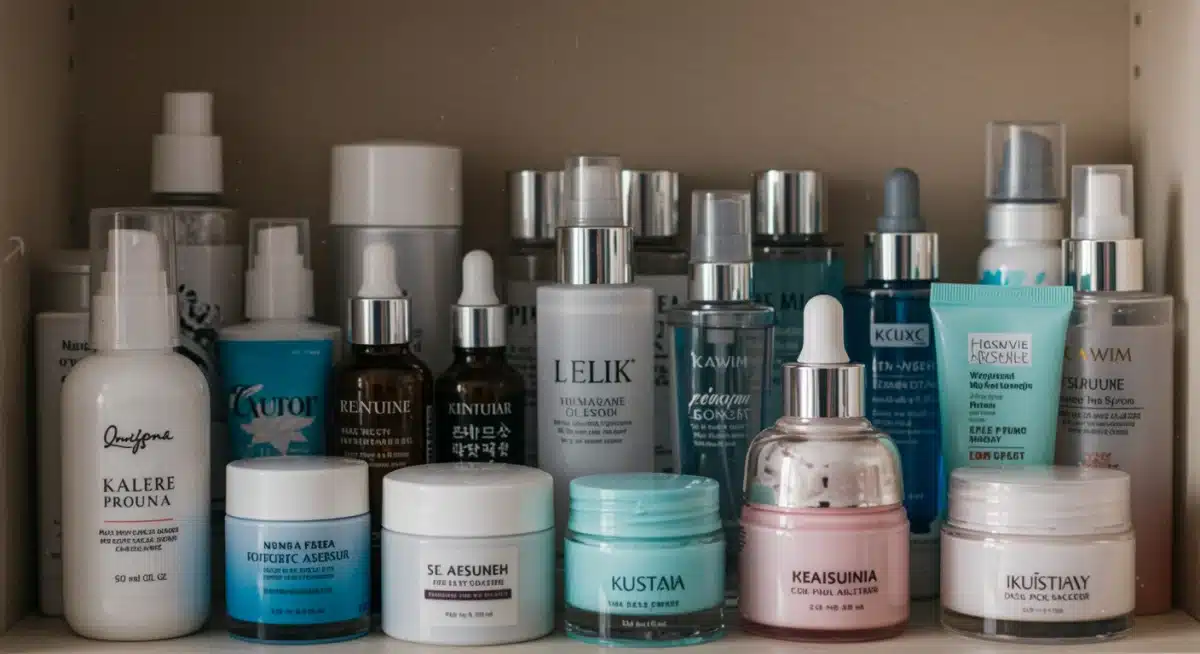
Korean beauty ideals often emphasize a softer, more youthful appearance, characterized by fair skin, large eyes, and delicate facial structures. While these specific features may not be universally attainable, the underlying principles of health, youthfulness, and meticulous self-care resonate widely. This exposure encourages a more diverse appreciation of beauty, moving away from a singular, narrow definition.
Challenging traditional gender norms in beauty
One of the more profound impacts of K-dramas is the subtle challenge to traditional gender norms in beauty. Male K-drama stars often exhibit equally meticulous skincare routines and wear subtle makeup, such as BB creams and lip tints, without it being perceived as a challenge to their masculinity. This portrayal normalizes male engagement with beauty products and self-care, a concept that is gaining traction in the US.
- Increased acceptance of male skincare products.
- Destigmatization of men using light makeup.
- Promotion of self-care as a universal practice, regardless of gender.
This subtle but significant shift is contributing to a more inclusive understanding of beauty in the US, where self-care is seen as a universal pursuit for both men and women. The K-drama narrative often presents male characters as both strong and aesthetically refined, showing that these qualities are not mutually exclusive. This encourages American consumers to consider a broader spectrum of beauty practices and ideals, fostering a more open and diverse beauty landscape.
Cultural Exchange and Consumer Behavior in the US Market
The pervasive influence of Korean dramas on US beauty standards is not just a cultural phenomenon; it also has tangible economic implications, significantly impacting consumer behavior and market trends. As American audiences become more immersed in K-drama aesthetics, their purchasing habits and brand loyalties are shifting, creating new opportunities and challenges for the beauty industry.
The demand for K-beauty products has surged, with major retailers like Sephora, Ulta, and even drugstores dedicating entire sections to Korean brands. This reflects a significant change in consumer preferences, as Americans actively seek out the products and routines that promise the radiant, youthful look seen on their favorite K-drama characters. This cultural exchange is driving innovation and diversification within the US beauty market.
The rise of K-beauty brands and product innovation
Korean beauty brands are renowned for their rapid innovation, often introducing new ingredients, formulations, and product types that quickly gain popularity. This constant evolution keeps the market fresh and exciting, attracting consumers who are always looking for the next best thing. K-dramas serve as an excellent marketing platform, showcasing these innovations in a highly aspirational context.
- Introduction of novel ingredients like snail mucin, cica, and propolis.
- Popularization of new product categories such as sleeping masks and ampoules.
- Emphasis on gentle, skin-friendly formulations suitable for sensitive skin.
Beyond direct product sales, the K-drama influence has also spurred American and European beauty brands to adapt. Many now incorporate K-beauty principles into their own product development, such as focusing on hydration, incorporating fermented ingredients, and promoting multi-step routines. This cross-cultural pollination demonstrates the profound and lasting impact of K-dramas on the US beauty industry, shaping both consumer demand and product offerings.
Beyond the Screen: Long-Term Impacts on American Beauty Culture
The phenomenon of Korean dramas influencing US beauty standards is far from fleeting; it represents a significant and potentially long-lasting shift in American beauty culture. This goes beyond temporary trends, hinting at a deeper integration of K-beauty principles and aesthetics into the broader American consciousness. The long-term impacts are likely to be multifaceted, affecting everything from personal routines to societal perceptions of beauty.

One key long-term impact is the sustained emphasis on skin health over cosmetic coverage. While makeup will always be a part of beauty, the K-drama influence has underscored the importance of a healthy canvas. This means more Americans are likely to prioritize preventative skincare, sun protection, and hydration as fundamental aspects of their beauty regimen, rather than relying solely on makeup to conceal imperfections.
A more holistic and inclusive approach to beauty
The K-drama effect is also fostering a more holistic and inclusive approach to beauty. It encourages individuals to view beauty as an ongoing journey of self-care and maintenance, rather than a fixed destination. Moreover, the diverse range of beauty ideals presented in K-dramas, alongside the normalization of male beauty practices, contributes to a more expansive and less rigid understanding of what constitutes attractiveness.
- Increased appreciation for natural and subtle beauty.
- Greater emphasis on internal health contributing to external radiance.
- Continued diversification of beauty product offerings in the market.
Ultimately, the influence of Korean dramas is helping to democratize beauty in the US, making it less about conforming to a single, often unattainable, ideal and more about personal well-being and self-expression. As the Hallyu Wave continues to evolve, its impact on American beauty standards will likely deepen, leading to a beauty culture that is richer, more diverse, and more consciously focused on health and radiance.
| Key Impact Area | Brief Description |
|---|---|
| Skincare Routines | Shift from simple to multi-step, hydration-focused regimens. |
| Makeup Aesthetics | Preference for natural, dewy, ‘glass skin’ look over heavy makeup. |
| Beauty Ideals | Broadening definition of beauty, embracing softer features and male skincare. |
| Consumer Market | Increased demand for K-beauty products and brand innovation. |
Frequently Asked Questions About K-Drama Beauty Influence
Korean dramas showcase characters with clear, radiant skin and natural makeup, inspiring US viewers to adopt similar skincare routines and aesthetic ideals. This visual exposure normalizes K-beauty practices, leading to increased interest in multi-step regimens and specific products like essences and sheet masks.
‘Glass skin’ refers to an intensely smooth, luminous, and translucent complexion. K-dramas popularized it by consistently featuring actresses and actors with this ideal, making it an aspirational beauty goal for American audiences. This led to a surge in demand for hydrating and brightening K-beauty products.
Yes, K-dramas have a notable influence on US men’s beauty standards. Male K-drama stars often display meticulous grooming and skincare, normalizing men’s engagement with beauty products. This encourages American men to adopt more comprehensive skincare routines and consider subtle makeup for enhancement, challenging traditional gender norms.
Several K-beauty products have seen a surge in popularity, including cushion compacts for dewy coverage, lip tints for natural color, essences and serums for targeted treatment, and sheet masks for intense hydration. These products help achieve the natural, radiant look often seen in Korean dramas.
Evidence suggests the influence will be long-lasting. The emphasis on skin health, preventative care, and a more holistic approach to beauty resonates deeply with consumers. This cultural shift, alongside product innovation and increased market availability, indicates a sustained integration of K-beauty ideals into mainstream American beauty culture.
Conclusion
The profound influence of Korean dramas on US beauty standards is undeniable, marking a significant cultural and aesthetic shift. From the meticulous multi-step skincare routines to the embrace of natural, radiant makeup and a broadened definition of beauty, K-dramas have introduced a fresh perspective to the American beauty landscape. This ongoing Hallyu Wave continues to reshape consumer preferences, drive product innovation, and foster a more inclusive and holistic approach to self-care, proving that the power of storytelling extends far beyond entertainment into the very fabric of our daily lives and how we perceive beauty.